Anton Maliauski Anton Maliauski

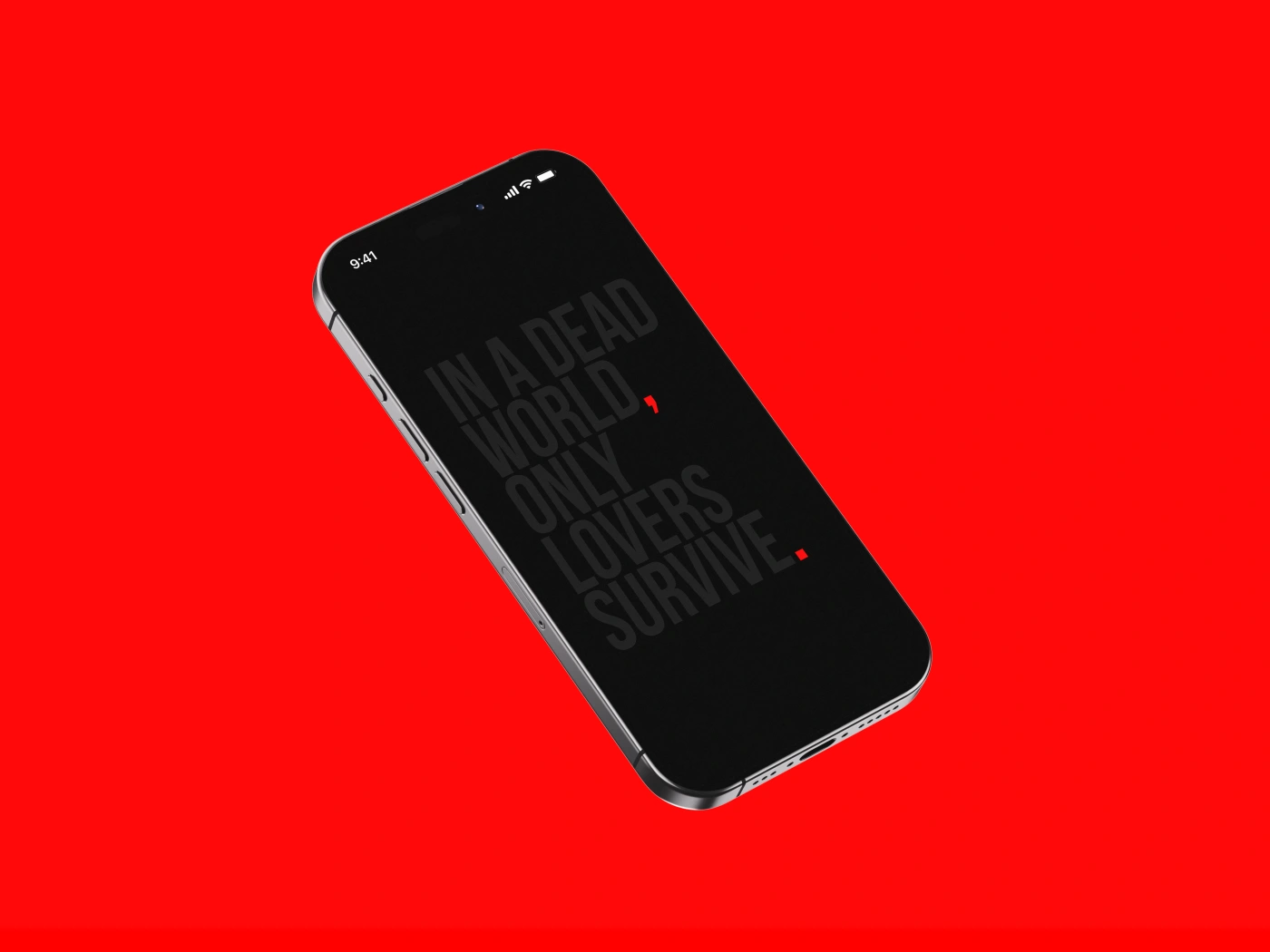
I noticed that this poster behaves in a very interesting way on a smartphone screen.

On a sunny day, I can barely see the text on it. To see it, you have to get the angle right. Point the screen straight at the sun, wait for the light sensor to kick in and for the screen to light up at maximum brightness. Only then does the barely discernible text begin to appear. Of course, this works if auto-brightness is enabled. Indoors or at night, on the other hand, the text becomes much more visible.

A black smartphone screen on a red background with the text: “IN A DEAD WORLD ONLY LOVERS SURVIVE”.
The poster on a smartphone screen

When I made this poster, I was not yet thinking of it as a digital object. I imagined it in physical space. For example, on matte paper, with the letters printed in a slightly glossier layer or made with some kind of embossing. You walk past the wall and suddenly notice that there is something on the poster. You come closer, and the text almost disappears. You look at it slightly from the side, and there it is again.

But it turned out that something similar happens on a screen. Digital space also has its own conditions. Light, brightness, sensors, the behavior of the device, the position of your hand, the time of day. The work begins to live a life of its own in an environment I had not originally accounted for.

I think we need to pay closer attention to how digital devices behave today. A smartphone, a TV screen, a chat with an artificial intelligence, virtual reality glasses. All of these have their own strangeness, their own sensors, their own small glitches and peculiarities.

And the better we notice this, the more precisely we can use this new space. Not just as a medium, but as part of the expression. Even if the meaning is very simple. Like on this poster.

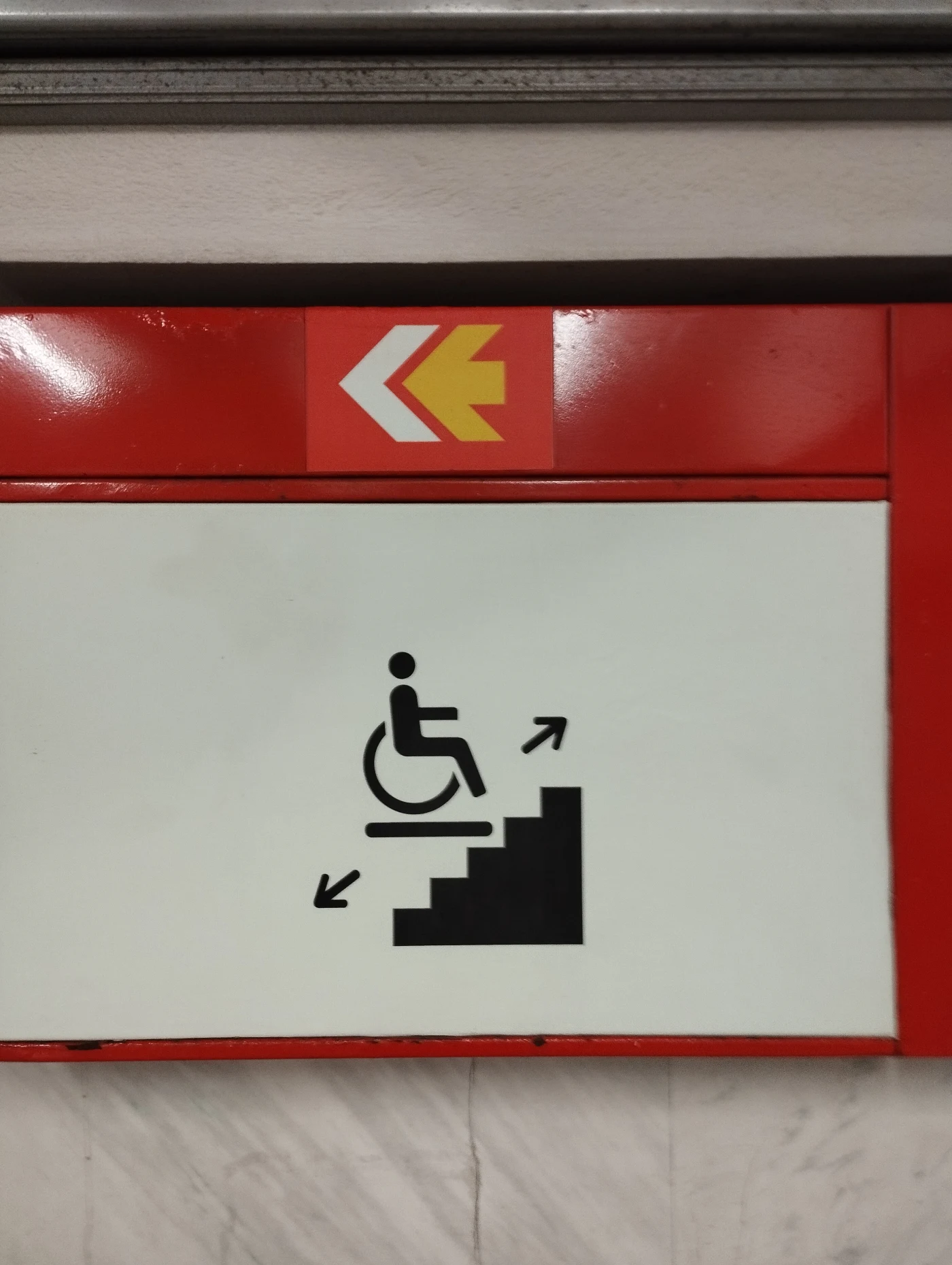
I saw this pictogram in an underground passage and felt all of its pain.

A sign showing a person in a wheelchair, with arrows pointing toward a staircase and an exit.
An accessibility pictogram in an underground passage in Minsk.

Honestly, I don’t know how to draw it better. I haven’t looked into the details or researched how signs like this are designed around the world. But what I see here scares me more than it reassures me.

There is a staircase here. These jagged steps are very prominent, very active. There is a wheelchair user on some kind of surface. But it is unclear how this surface is supposed to move along the steps, and why this movement should create any sense of safety.

I’m not saying the pictogram needs to show the entire mechanism. But it should contain at least the idea of smooth movement. Here, it doesn’t. The eye does not move upward with the platform. It trips over the steps.

The arrows look strange, too. They seem to live in a world of their own. It is unclear what exactly they are explaining. If the sign is located below, inside the passage, then the downward arrow no longer makes sense. The task is not to go even lower, but to get back up. Yes, I understand that there is standardization and that there are standard templates. But the standard should follow the meaning, not the other way around.

Formally, this pictogram has everything. Stairs. A wheelchair. Some kind of platform. Arrows. The logic seems to be assembled. But the meaning gets lost.

A pictogram of this kind should be a saving symbol. A sign that a person’s problem has been solved here. But this pictogram does not solve the problem. It creates a new puzzle. Where should this person go? What will move? How does it work? Is this person supposed to overcome this staircase?

I look at it and see not accessibility, but a barrier. Not “you will be lifted,” but “here are the stairs, good luck.”

This is a small scene of tension, not a sign of help.

From series Just write
  1. Writing with AI as Play with the Unlived

It seems to me that writing with the help of artificial intelligence is a wonderful thing. And people underestimate it today, because they often think about it too flatly: as if you are simply asking a machine to write a text for you.

But they do not see the whole game. They do not see all the work that happens behind the scenes.

For example, I go out for a walk, open a chat, and begin a conversation. This conversation can last for several hours. And at some point, it turns into a note, and sometimes into a whole essay. Not because I simply said: “write me a good text.” That is not how it works. And not because I gave the machine a set of constraints and received a finished result. I would most likely write that kind of text better myself.

The real work with artificial intelligence begins somewhere else. In the mode of playful guidance. When you do not hand the text over to the machine, but create an environment in which thought begins to move differently.

But I have realized that this method has its own downside. For me personally.

June 2026
Minsk, Belarus
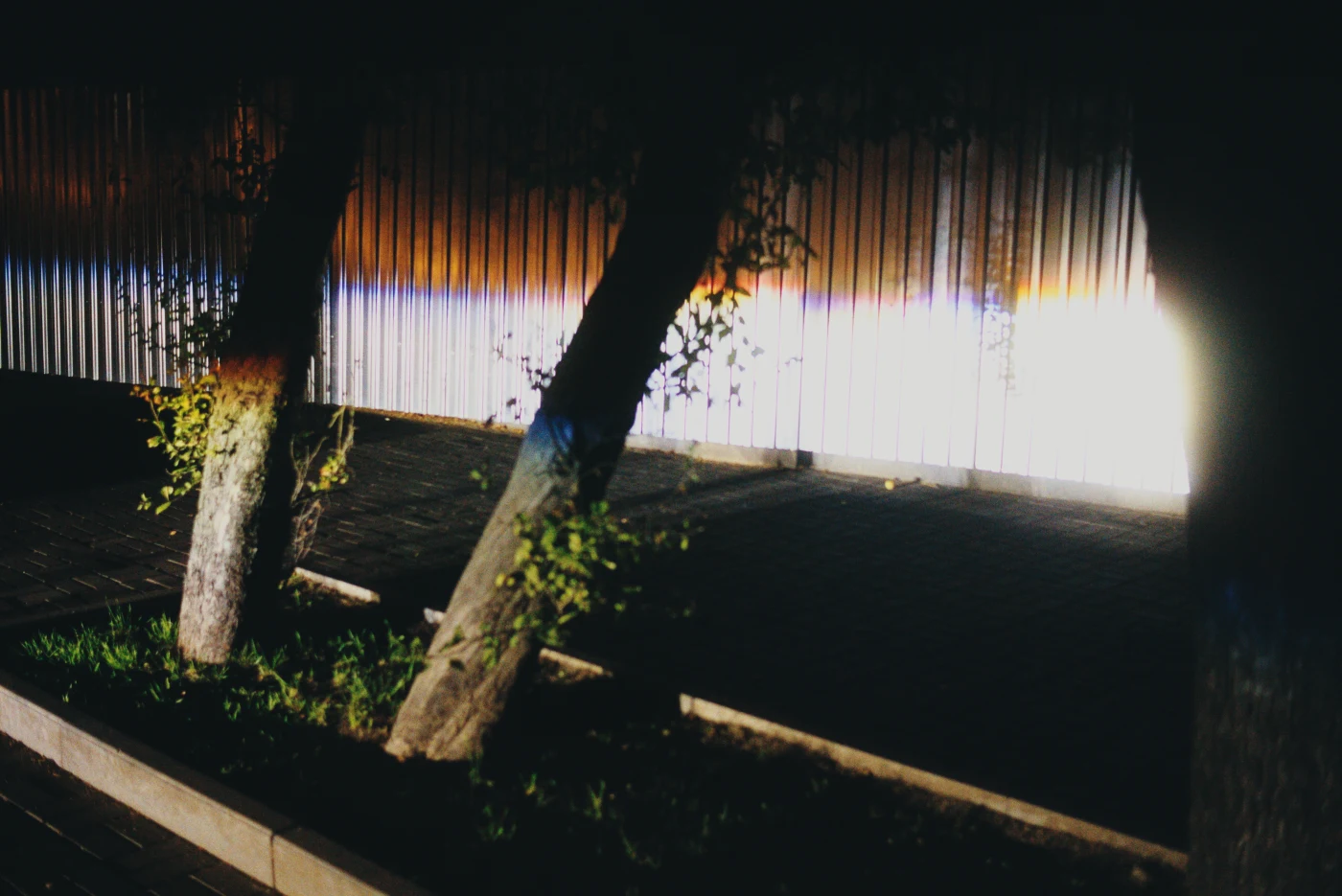
Before it got dark, I decided to take a walk through the microworld.

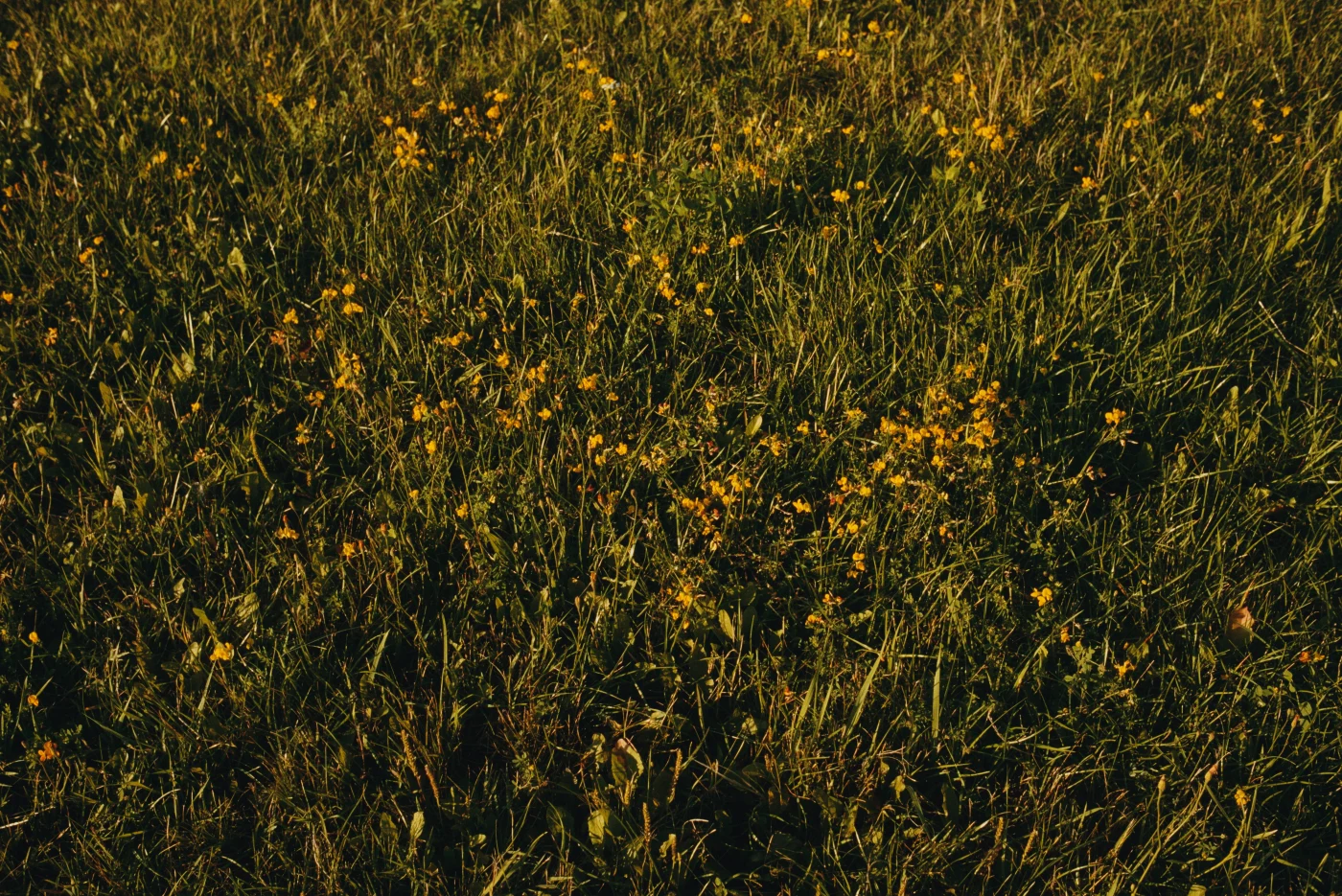
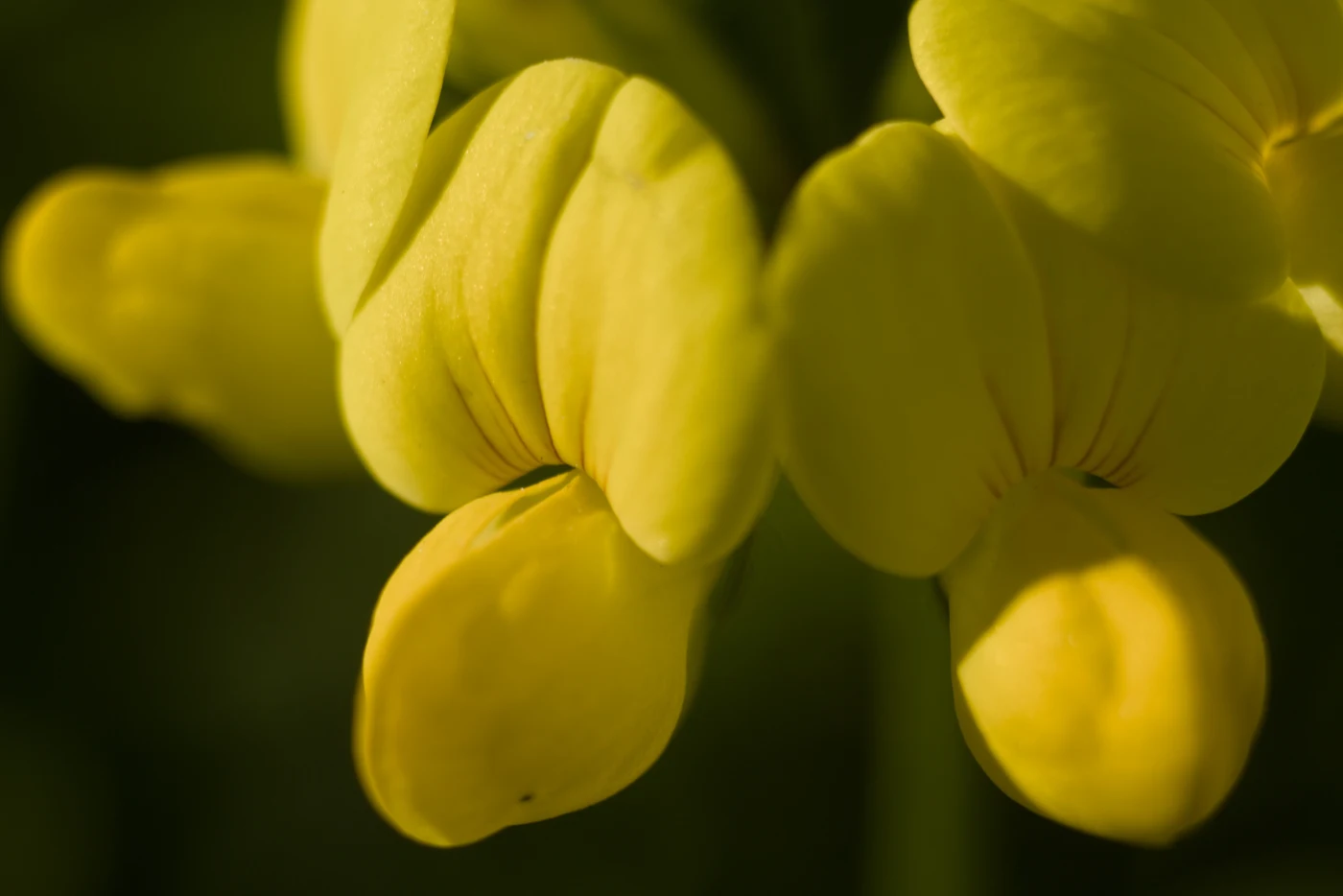
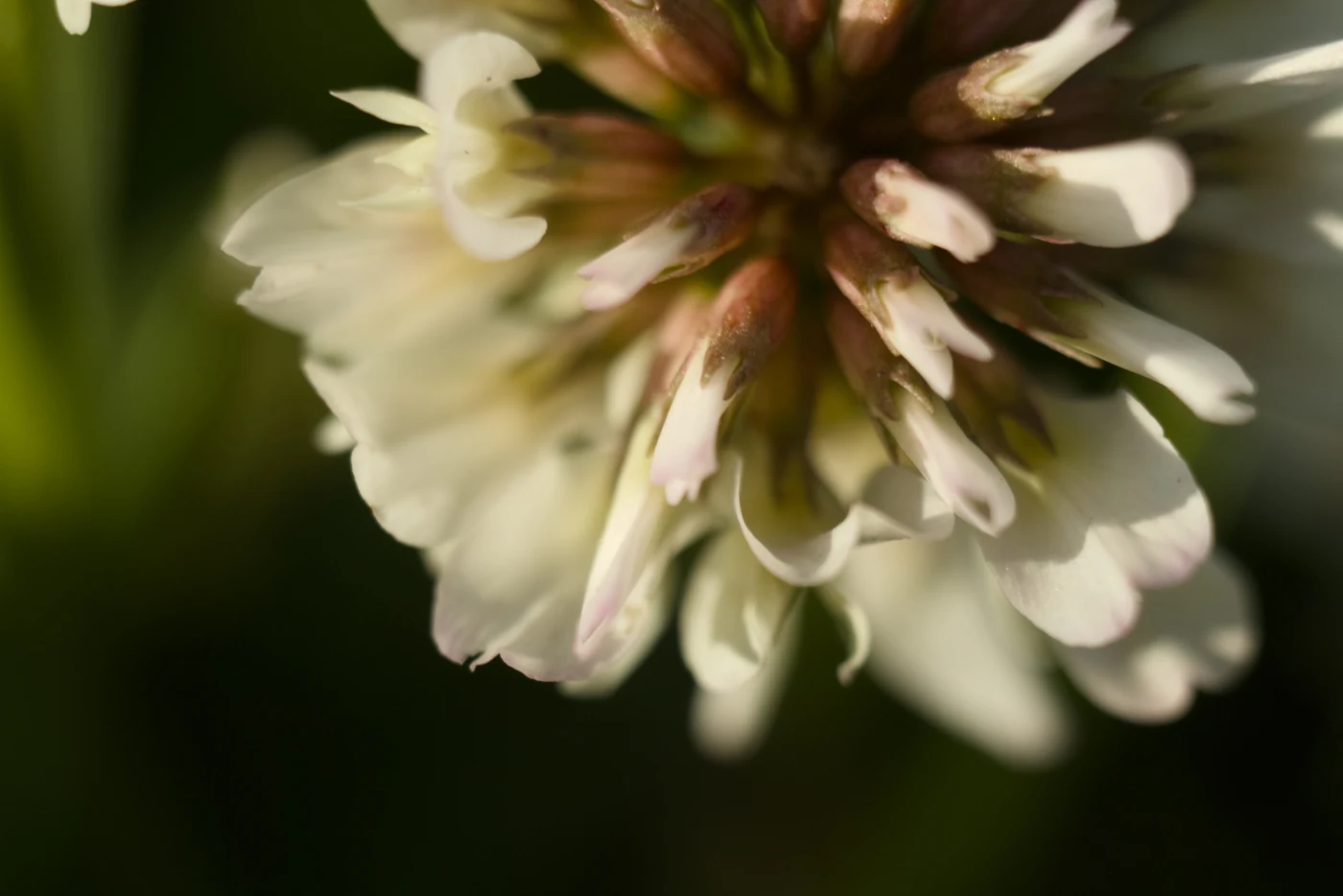
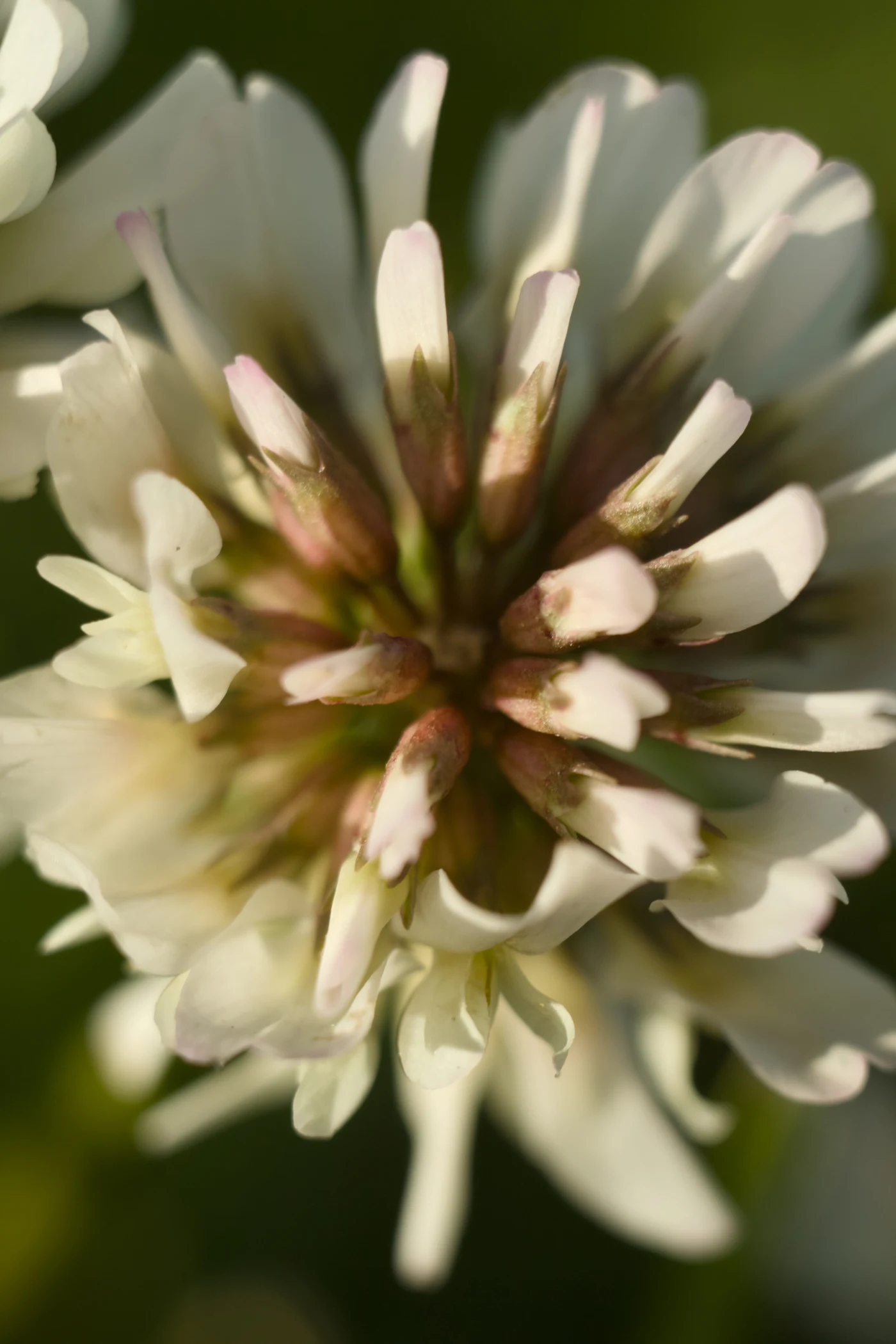
This is my first experience like this, and I already really like it. I got stuck near some tiny white and yellow flowers, literally on ten centimeters of ground. But in macro, it is no longer ten centimeters. It is a whole little city square: the flowers stand in different ways, some in pairs, somewhere there is a blade of grass, somewhere gaps between them, somewhere light.

It felt like I had looked into a small world that had been right here all along.

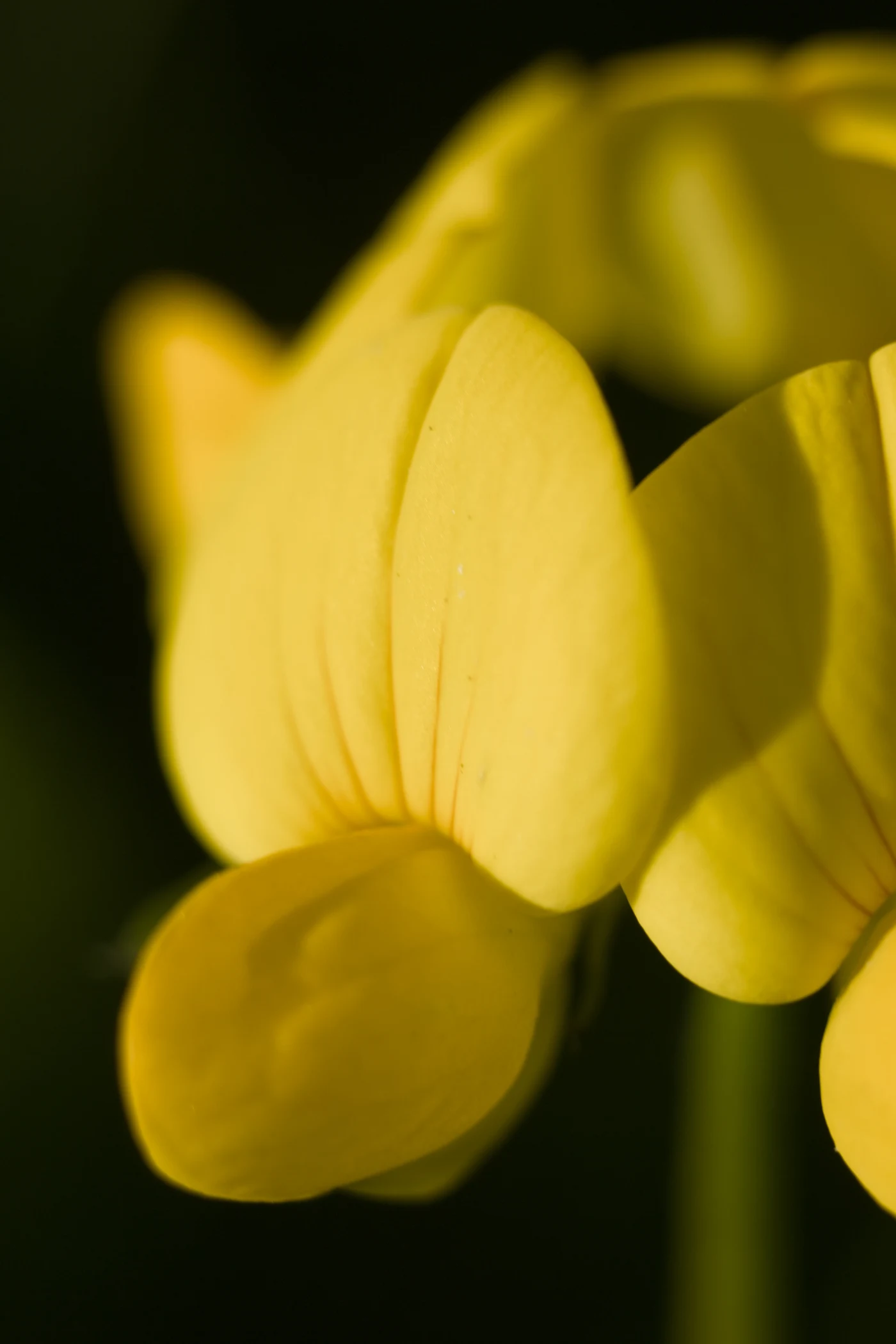
Yellow flower with delicate petals against a dark background.
Yellow flowers with rounded petals against a blurred green background.
Macro shot of white clover with delicate petals and green tones.
White clover with green leaves, close-up. The flowers have tiny petals and a dense center.
White clover with pink tones in the center, close-up.
From series Brownian wandering
  1. Brownian Wandering. Episode 2

A small documentary sketch from a photowalk in the Zavodskoy district of Minsk. People with cameras, a random route, evening light, conversations on the move, and a city that seems to lead us a little by itself.

Featuring: Andrey, Ira, Roman.
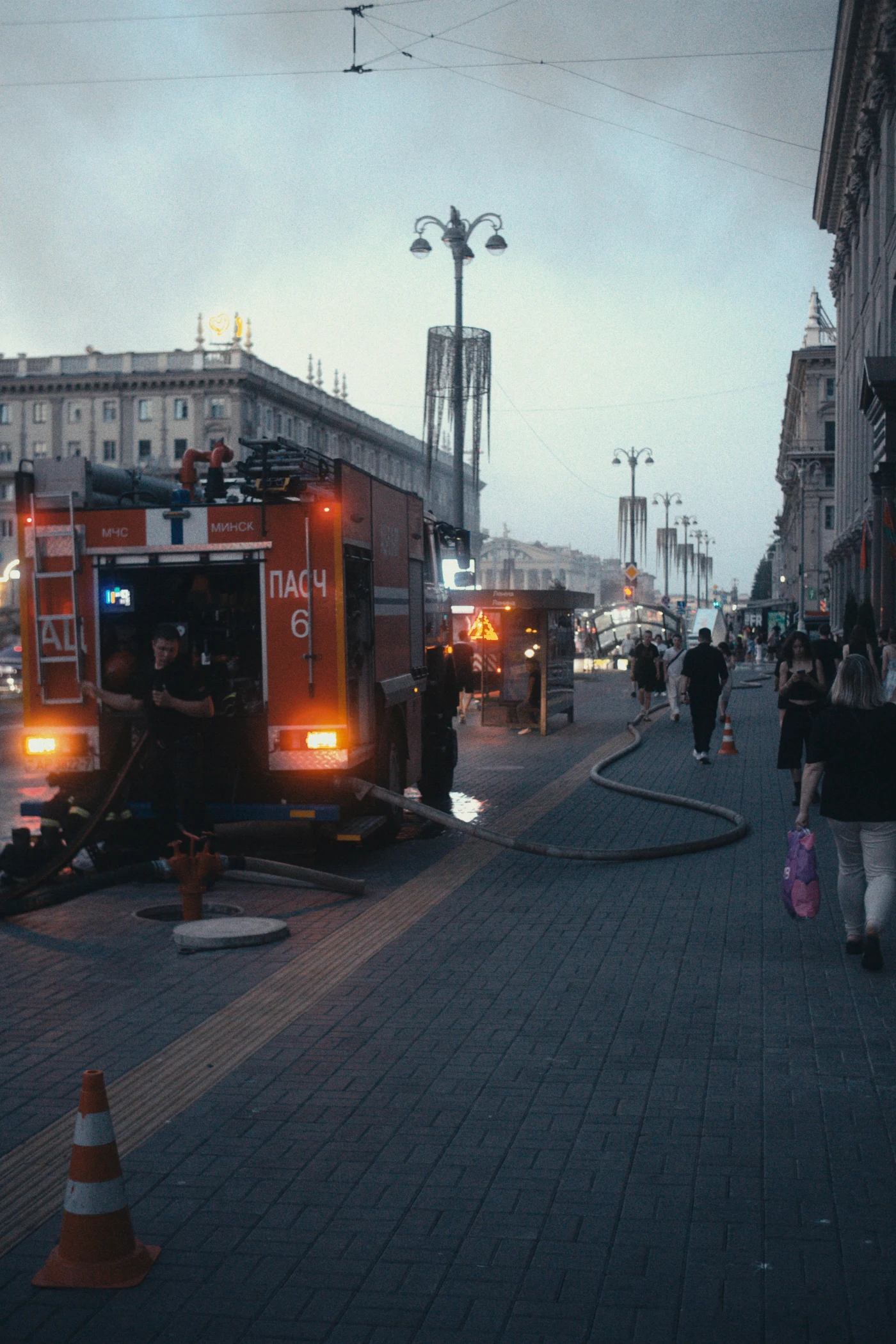
Me behind the camera.

FILM BY ANTON MALIAUSKI
CAMERA / CANON EOS M
CROP MOOD / OPENGATE 4:3 / 14BIT
LENS / MIR-1V
HANDHELD SHOOTING
LOCATION / MINSK / ZAVODSKOY
MUSIC / PORADOVSKYI / FUNKY
ANTOMAL.COM / 2026

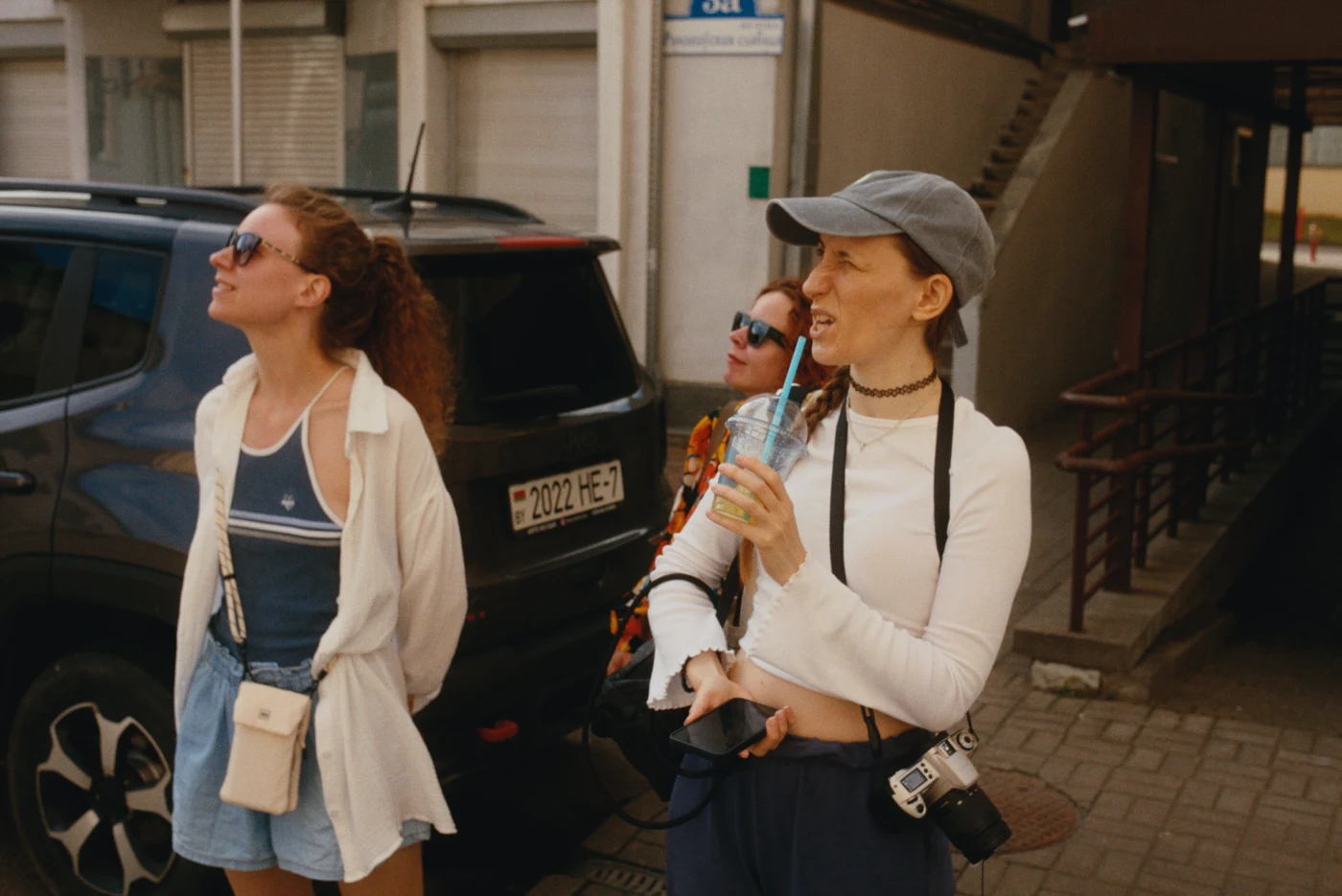
Two people on the street: a man with a backpack and a woman wearing a cap and sunglasses.
00:00:00:05
Brownian Wandering, episode 2. Text about freedom and the participants in the process. A person against a wall.
00:00:07:11
A person with long hair photographs on the street, standing against an abandoned structure and greenery.
00:00:29:02
A woman with a camera, with a bearded man in the background, both outside among greenery.
00:00:48:02
A person with a backpack photographs against a background of a truck and buildings under a clear sky.
00:00:58:21
Two metal doors on a brick wall, numbered 58 and 59. Sunlight illuminates the facade.
00:01:02:05
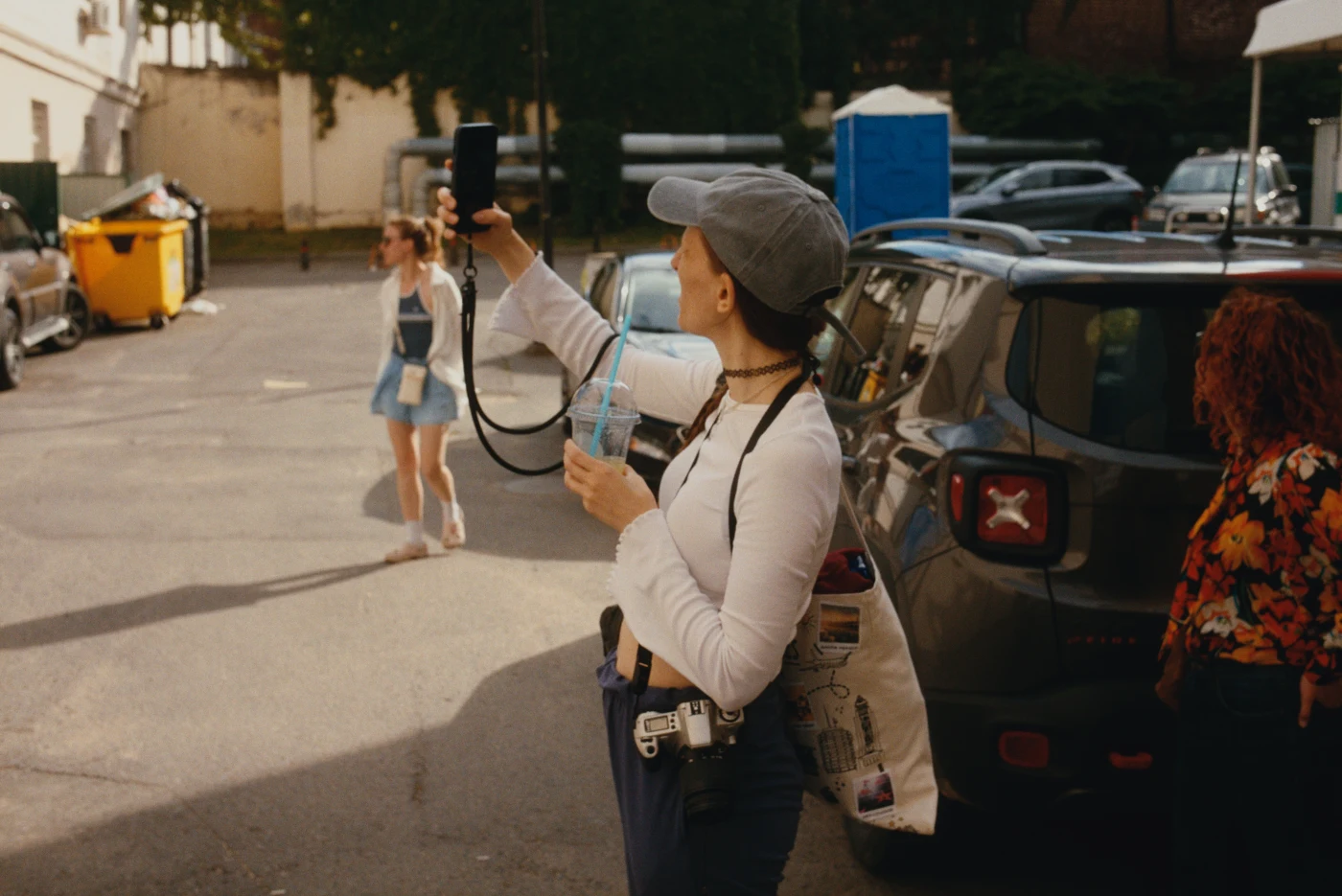
A person photographs the sky on a smartphone, with silhouettes of branches and evening tones visible.
00:01:38:01
Two people walk along a wooden wall, one in a brown coat with a backpack, the other in light-colored clothing.
00:01:42:22
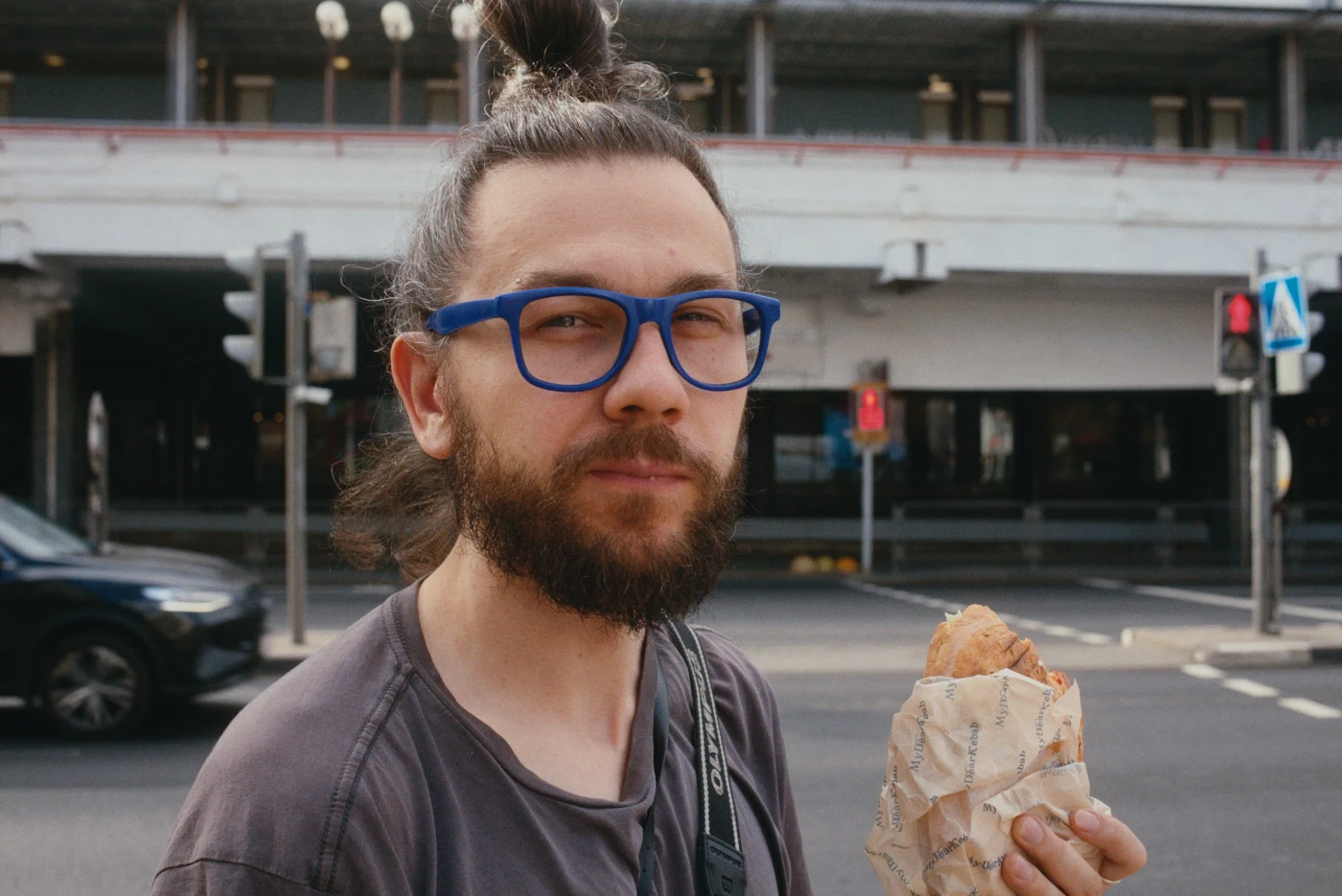
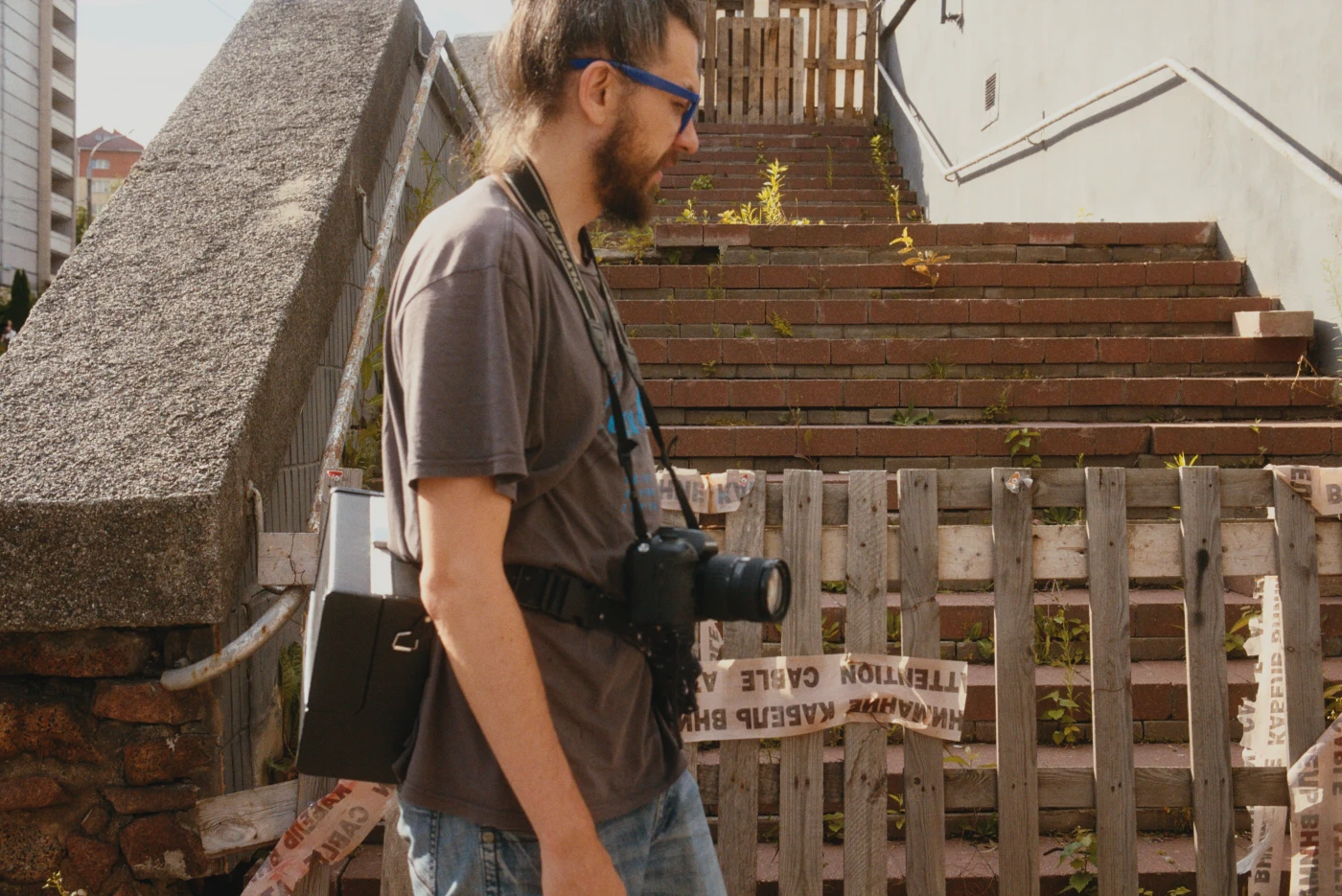
A man with long hair and blue glasses, wearing a brown jacket, looks down against an urban landscape.
00:01:53:02
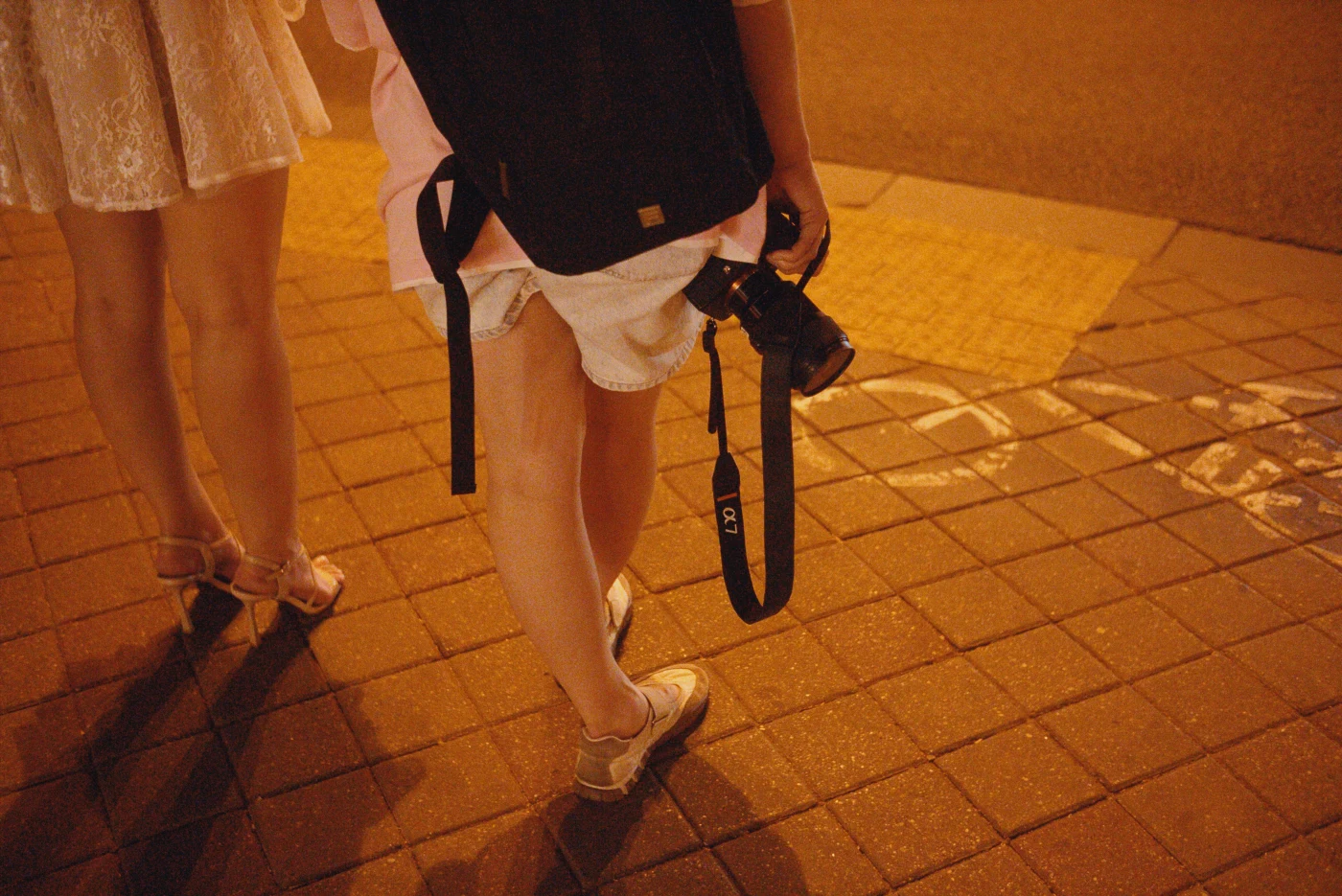
Two people walk along a road, one holding a camera in their hand.
00:02:03:21
Three people walk along an empty street against an evening sky and green trees.
00:02:07:03
A group of people walk along the street, one of them wearing a UFC cap, with trees in the background.
00:02:10:11
A foot in a blue sneaker on asphalt. Text: “FILM BY ANTON MALIAUSKI”, with camera and music information.
00:02:26:12
June 8, 2026

I am sitting under a tree.

It has sheltered me beneath its huge canopy. I cannot see the structure of the leaves, cannot see whether there are flowers there or not. It is just a large dark roof above me.

In front of me is the Svislach. The embankment, concrete, rare passersby. Night, silence, darkness. I am a little bored.

During the day, it feels as if we have many options. Any photographer will understand me. And not even necessarily a professional photographer, but a person who goes out with a camera, or a person who goes out without a camera but simply knows how to look. During the day, you dive into this abundance. You see so much. The world itself offers you frames, shapes, light, faces, trees, reflections.

But sometimes you do not want to choose from what is already given. Sometimes you want to look into the unknown. To trust what is here now. To see what is around me within arm’s reach. To touch it, in another language.

I take out the camera. Maybe out of boredom. Maybe with a childlike curiosity. I point it upward, turn on the flash, and take one shot.

Not ten. Not a series. I do not check the screen.

Just one shot.

I see the flash light up the tree for a second. And the world immediately returns back into darkness. I put the camera away and continue walking through the night city.

But later, already at home, when I open this photograph on the computer and develop it, I suddenly see what I did not see there, on the bench. Leaves. Flowers. Structure. The beauty that, at that moment, was right beside me, above me, around me.

Flowering tree branches against the night sky.
I saw all this beauty only after the photograph was developed.

I made a simple accidental “shot” with the camera, but it illuminated what was already there in reality.

In the note “A View from the Dark”, there was the thought that sometimes you need to remove the excess light in order to see differently. To look from the dark. To listen from silence. To step out of the noise of the day, out of the obvious, out of ready-made illumination.

Here the thought is similar, but it is about something slightly different.

Here I am not simply looking from the dark. I am trusting the space. Trusting the moment. Taking a step without knowing what exactly I will see.

Perhaps this is how it happens in life too.

We make some simple step. Sometimes almost accidental. We direct our attention toward a place where there seems to be nothing special. We illuminate a piece of reality for a second. And in that very moment, it may tell us nothing. We see only the flash, a brief illumination, an instant. And then everything returns to darkness again.

But something has already happened.

We have already exposed reality.

And now we only need to stop and see what has emerged.

See also  Link to this section

June 2026
Minsk, Belarus
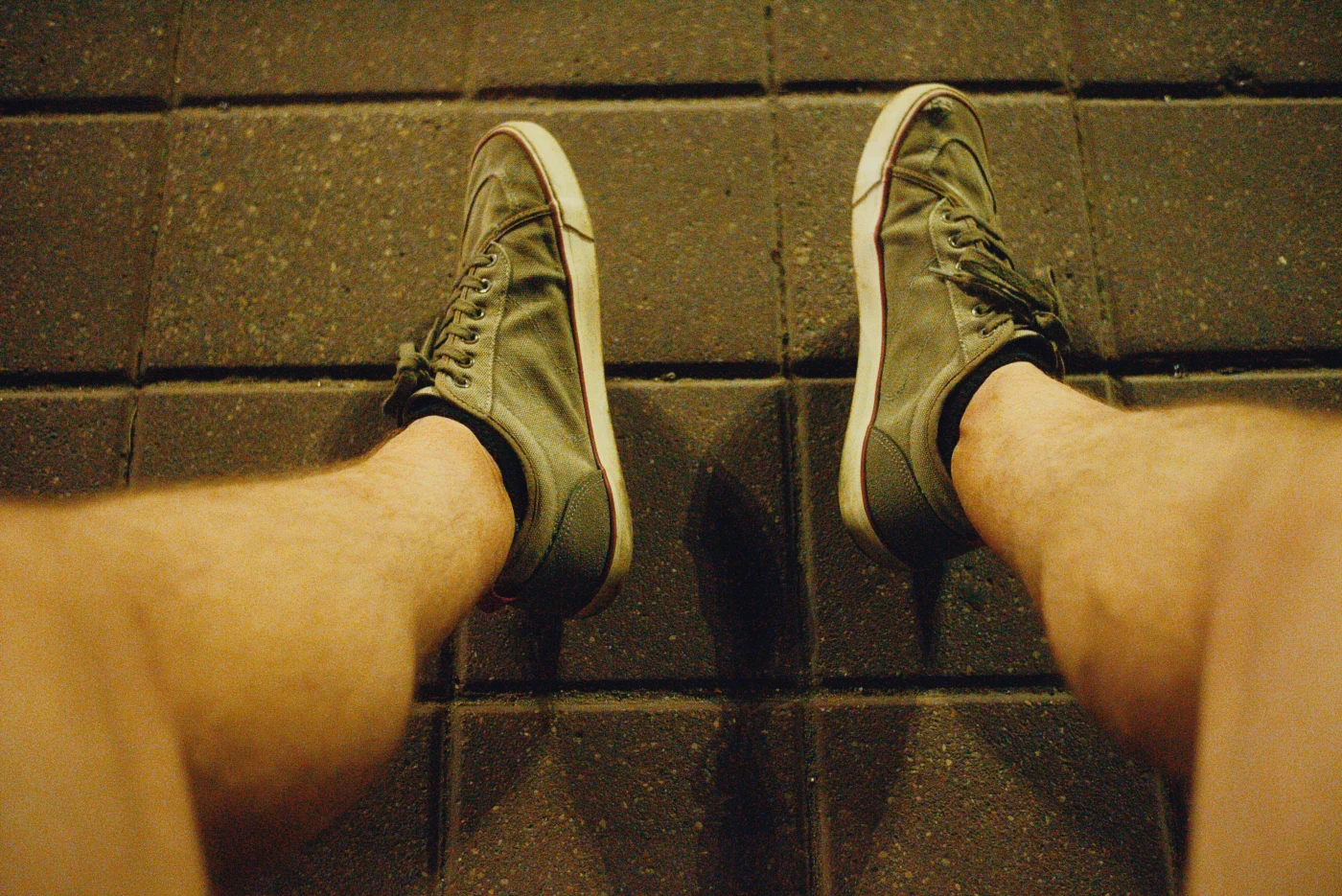
Yellow flowers with a residential building and parking lot in the background, with an electric vehicle charging station nearby.
Branches and leaves lying on the hood of a car, with a layer of dust visible.
A person in black clothing stands in front of a building, reflected in fogged glass with film on it.
An empty cabinet with drawers and open doors, with tools and a mat lying on the floor.
A red shop window with a figure resembling drops of paint and a building reflected in the glass.
A blurred image of a black car moving along a street with road markings and a barrier.
A yellow flower bed, a table, and a notice board by the wall of a house.
Flowers in a black planter on a metal stand, next to a weathered wall with peeling paint.
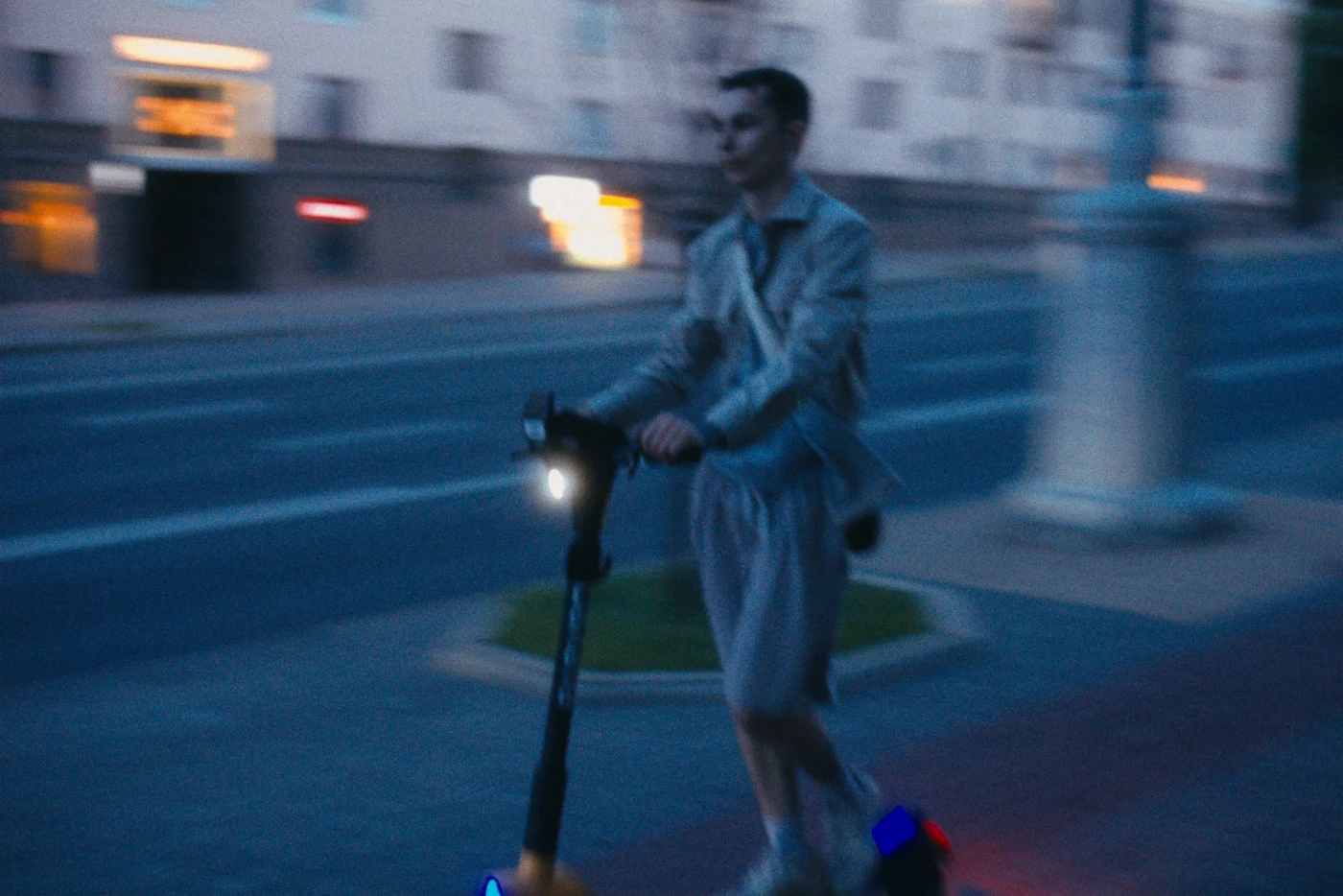
A guy on an electric bike rides through an intersection, wearing headphones and sportswear. Buildings are visible in the distance.
A person’s reflection in a window, with a plant on the windowsill and a building in the background.
An empty corridor with columns and a door at the end, creating an atmosphere of mystery and solitude.
A person’s reflection against a building with the sign “Centralny”. Shop windows and the street are out of focus.
A crack in a wall with exposed brick, with green trees and buildings in the background.
A fragment of an old building with a balcony and windows, with greenery in the foreground.
The facade of a building with balconies and a fire escape, gray in color, under a cloudy sky.
A high-rise building with balconies and a drainpipe, photographed from below against a gray sky.
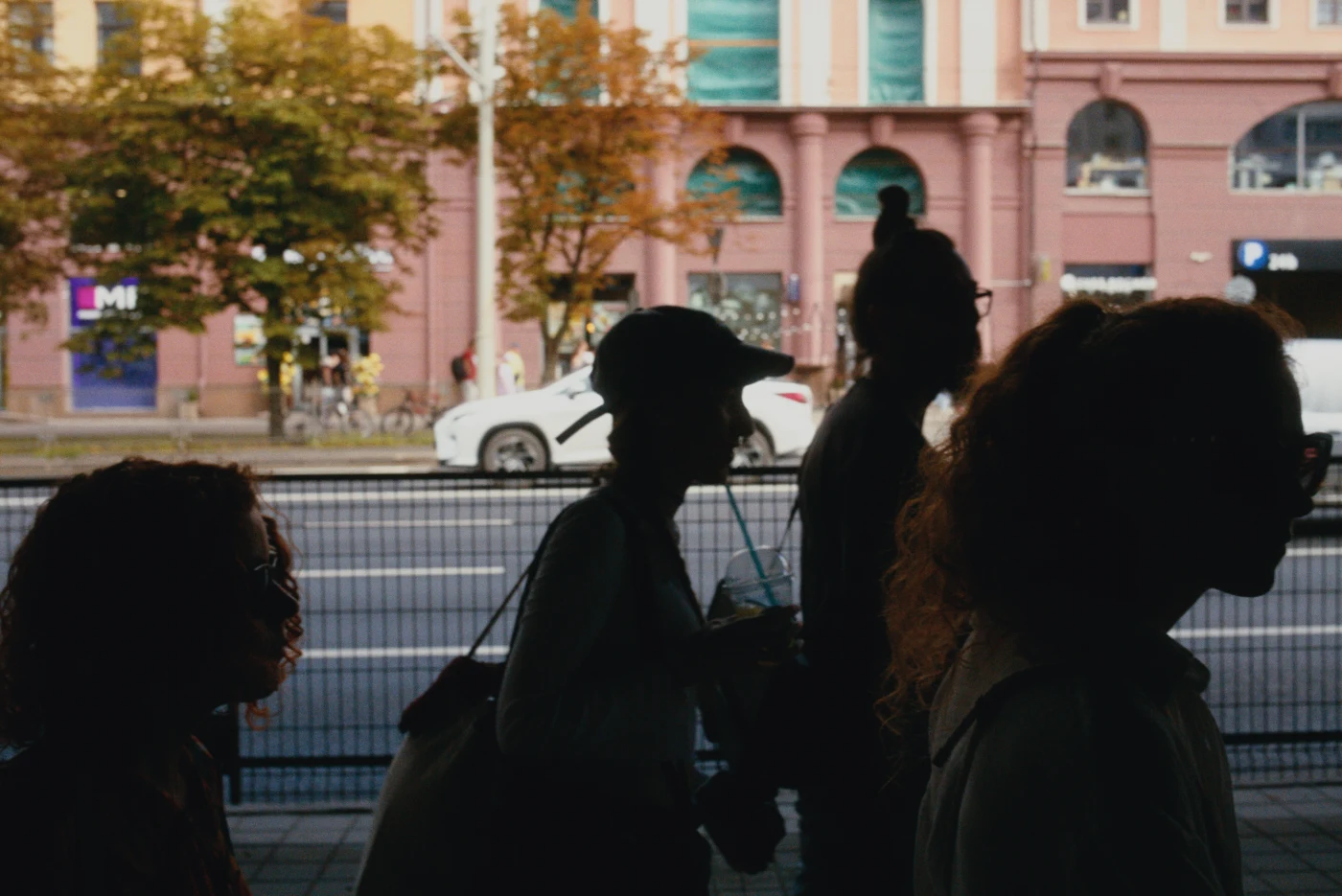
A group of people walking under a bridge, with an urban landscape and river visible in the background.
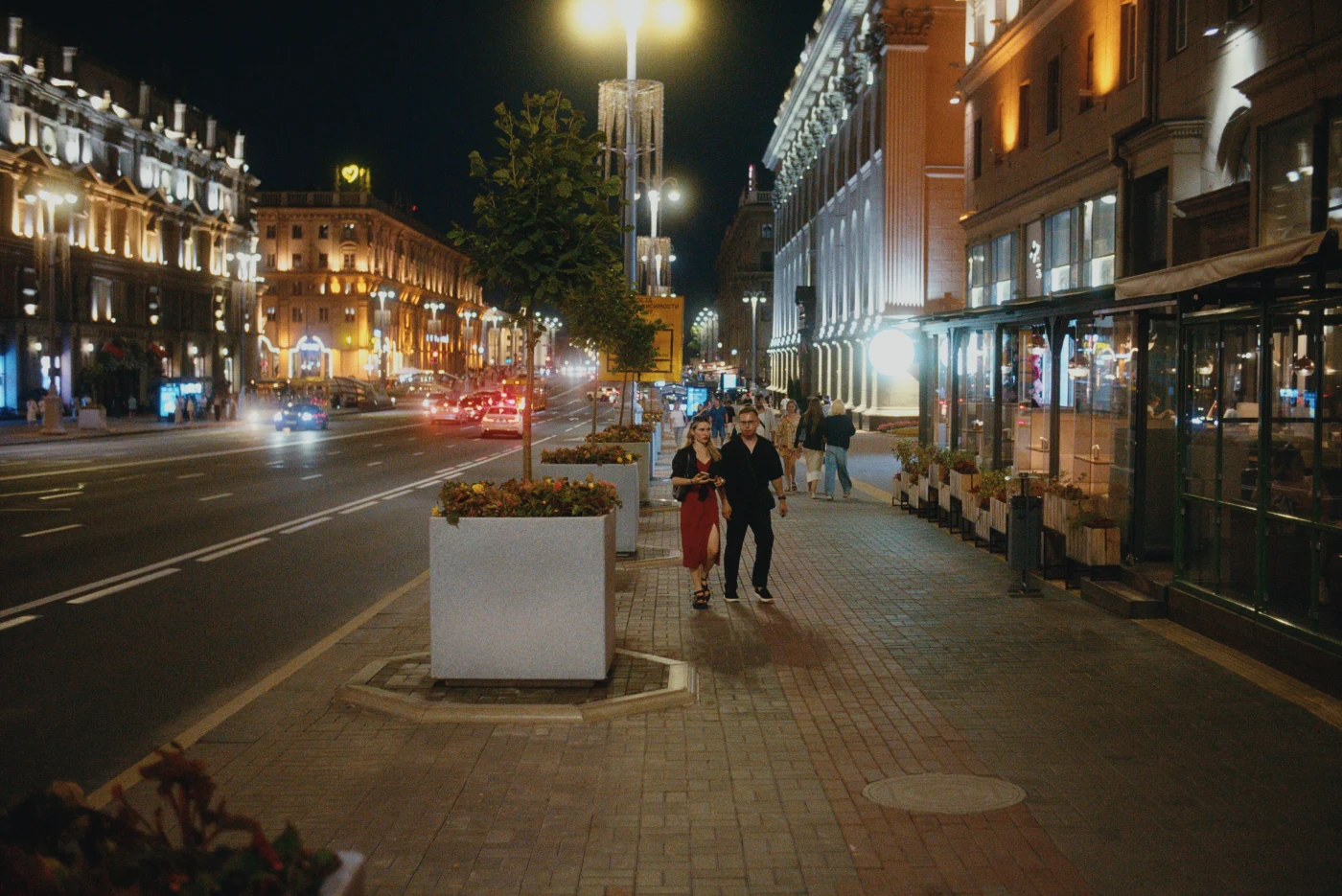
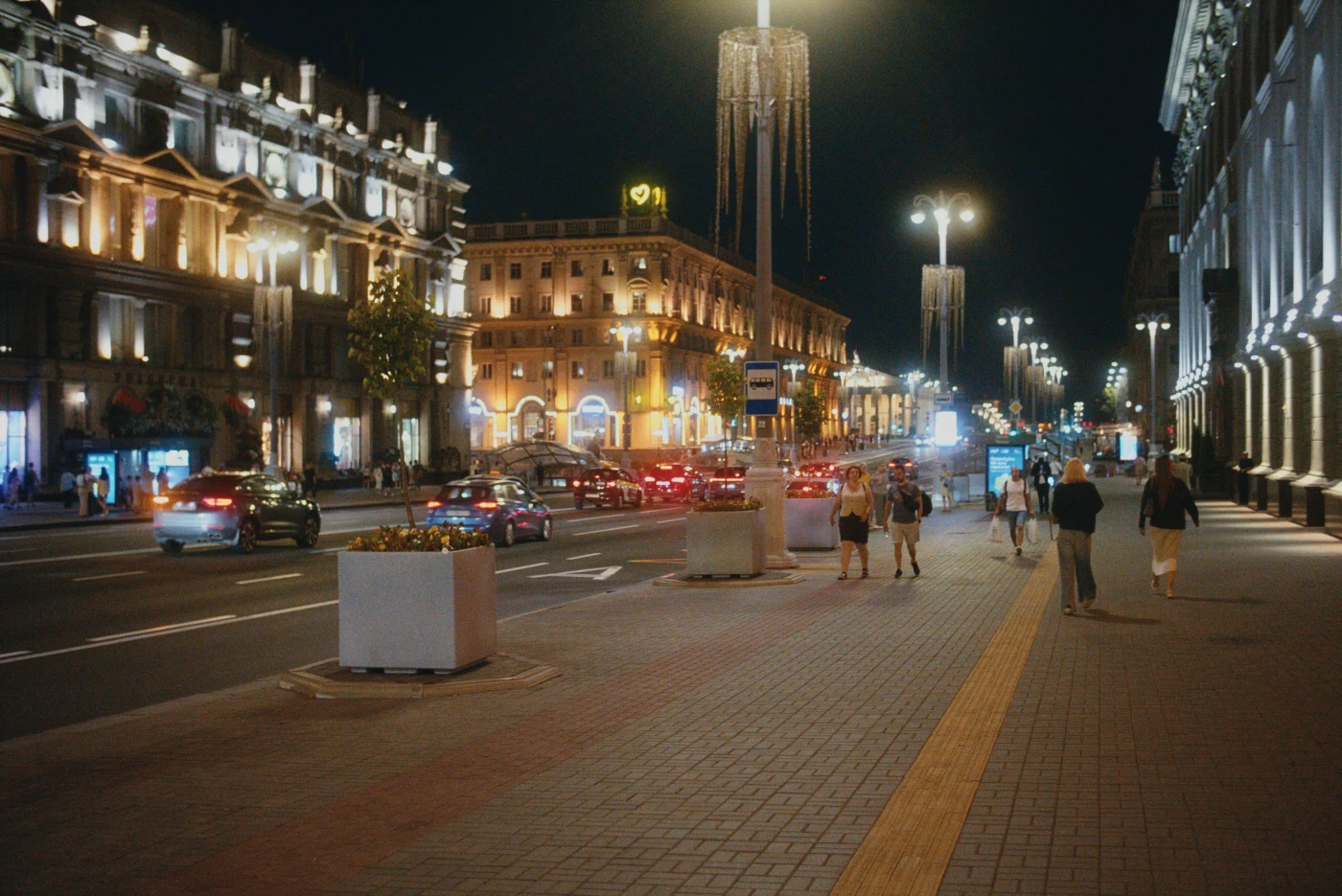
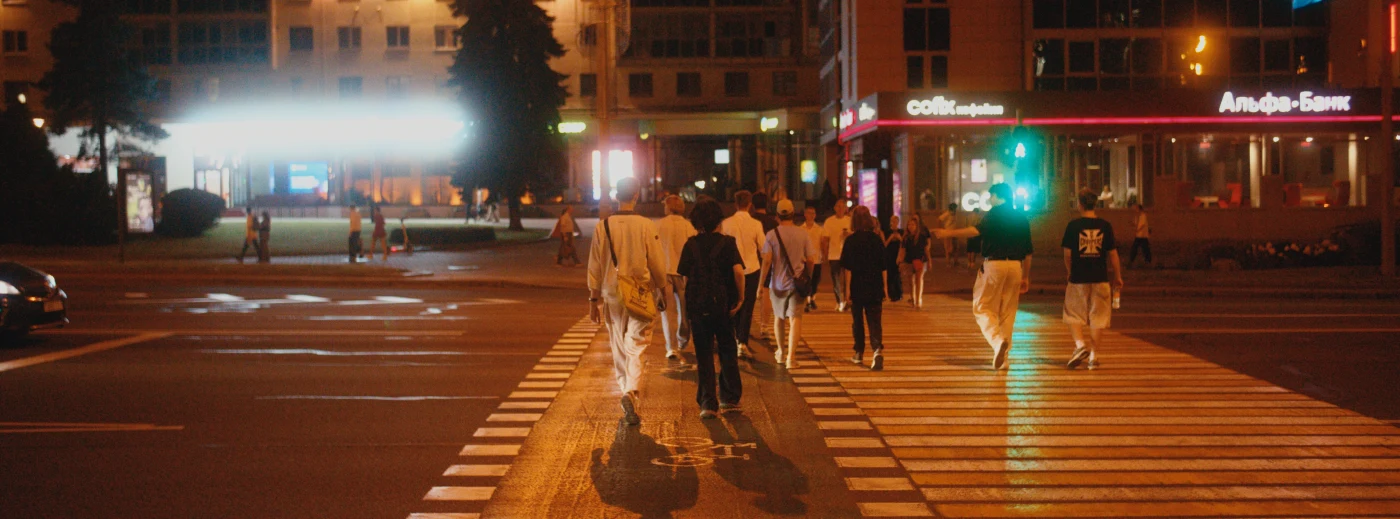
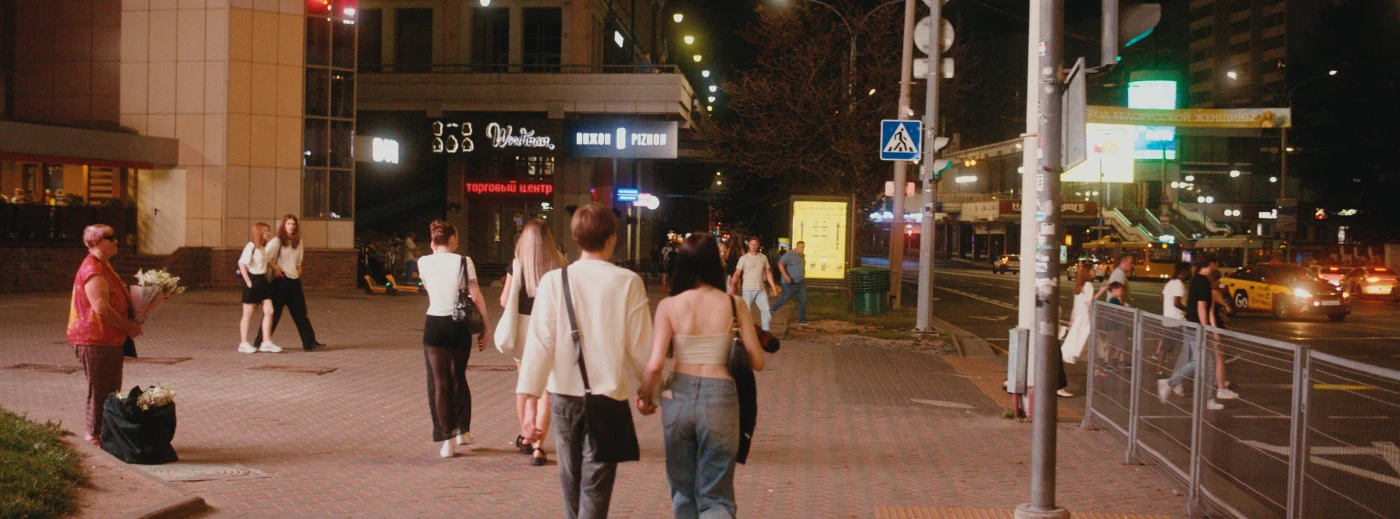
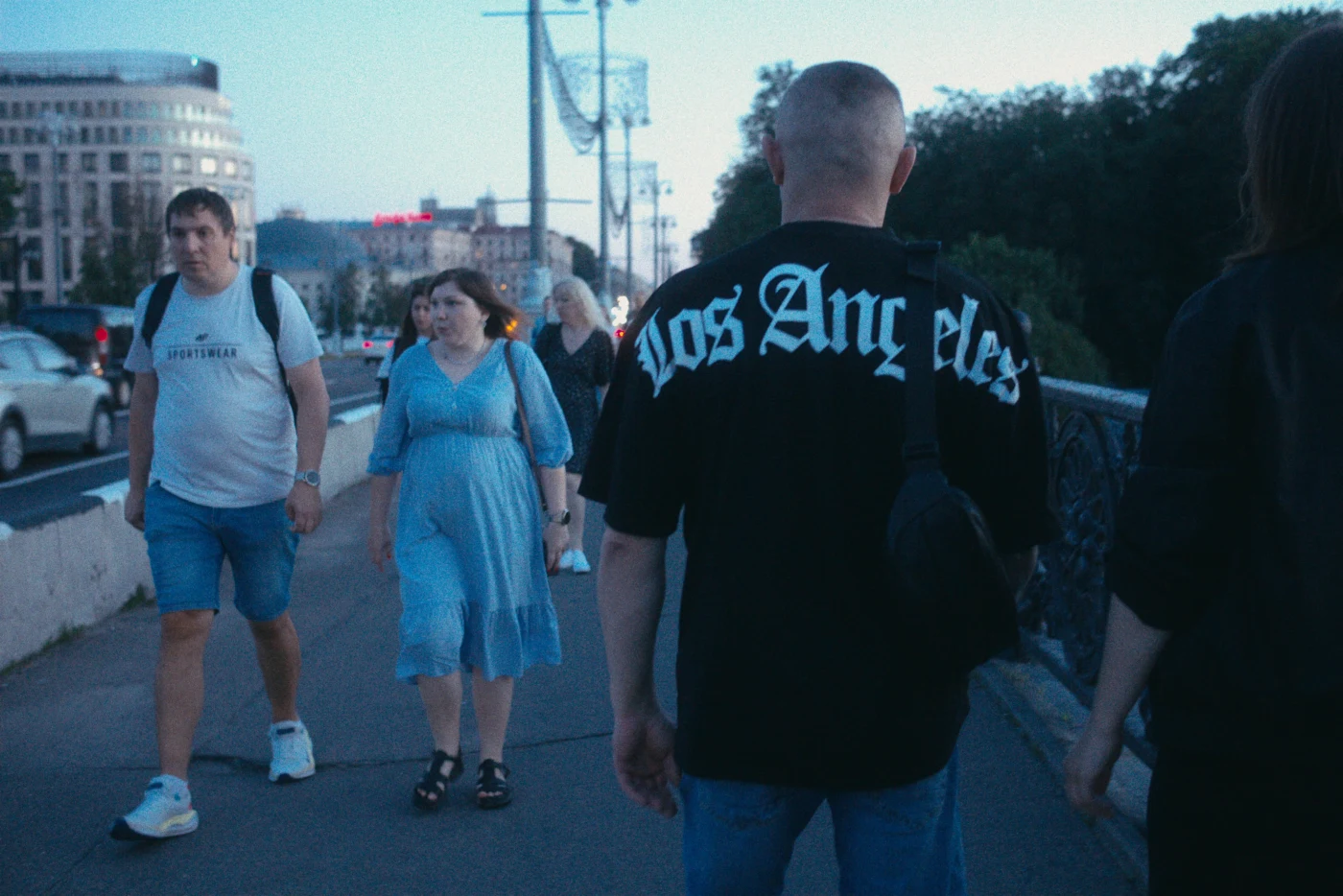
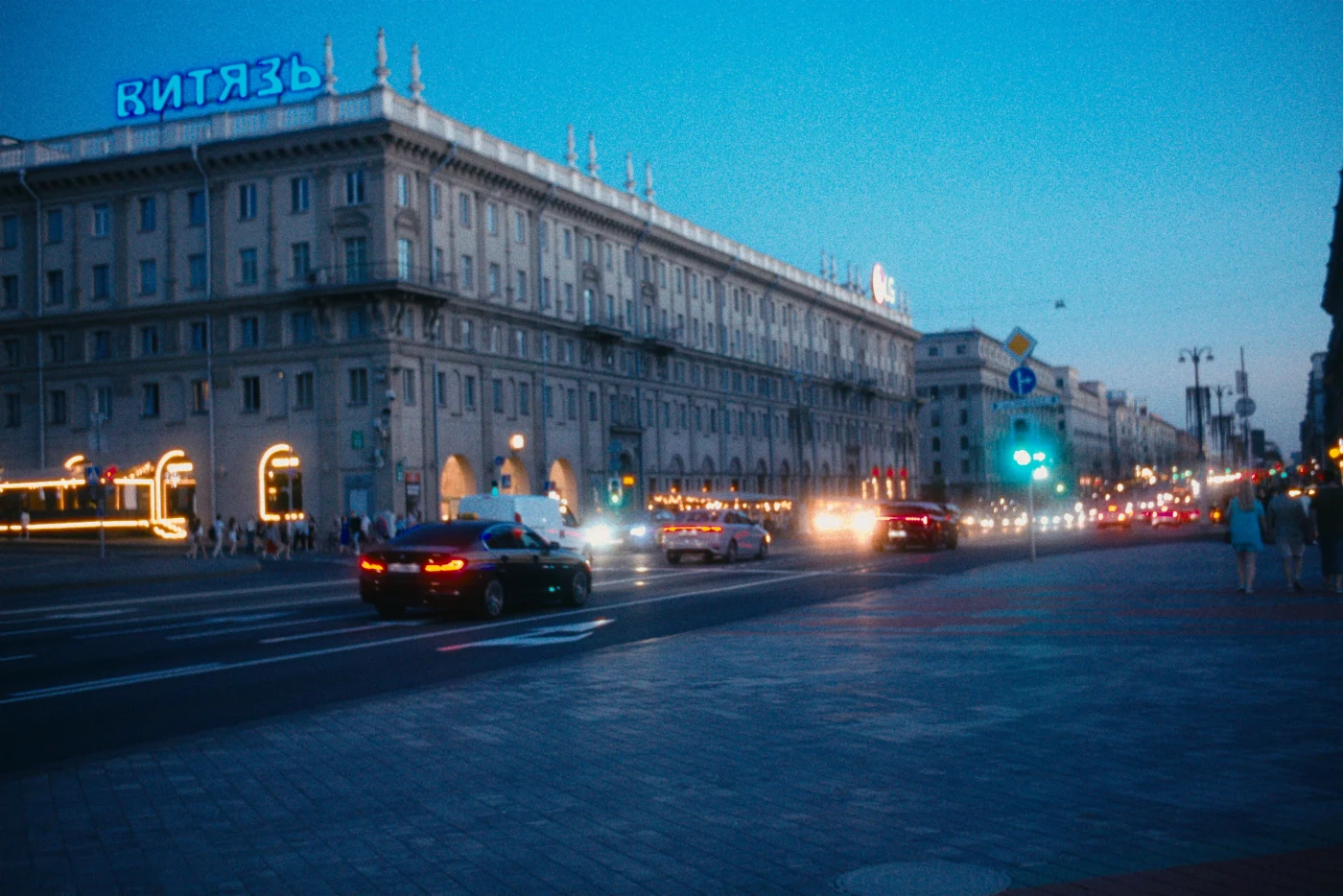
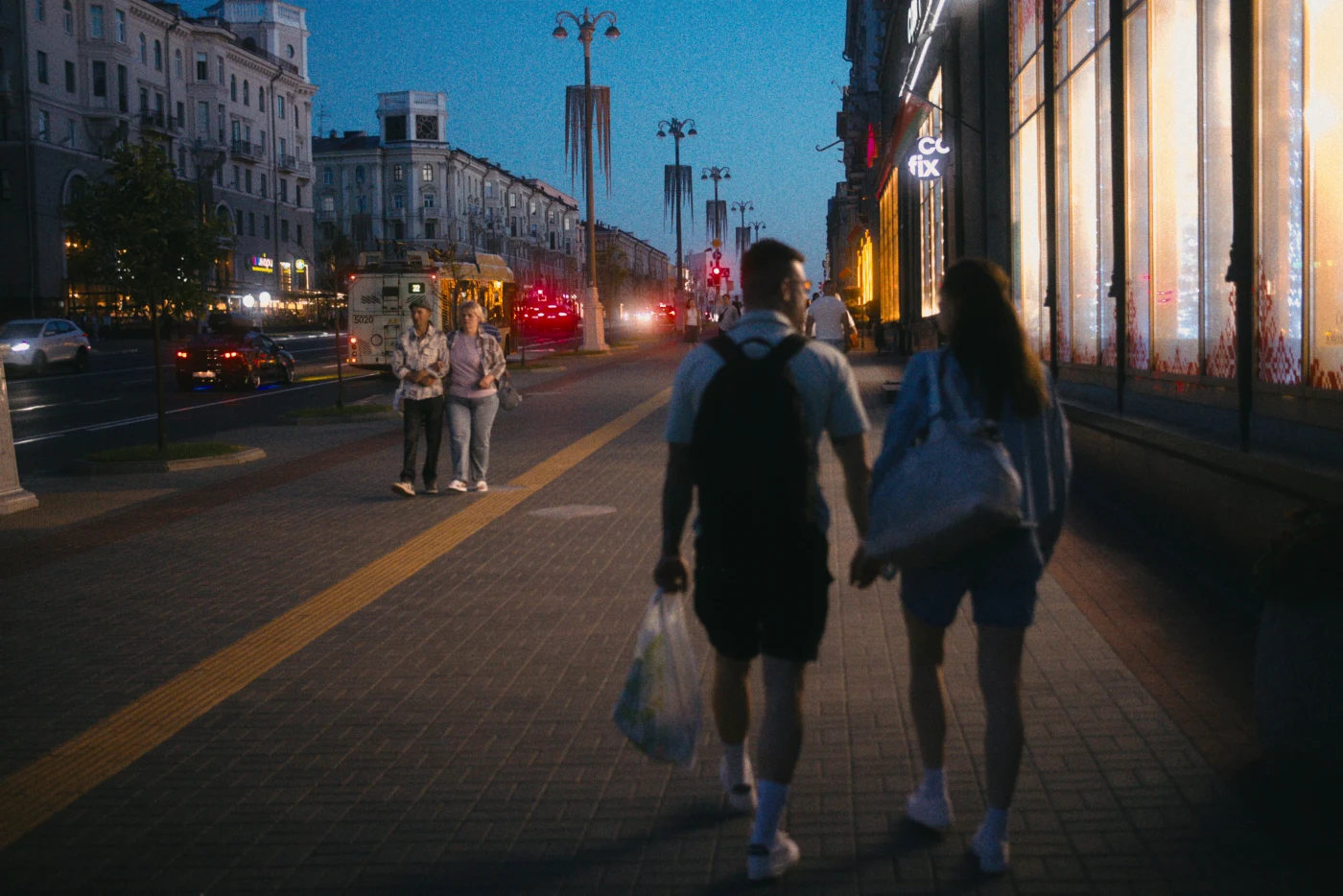
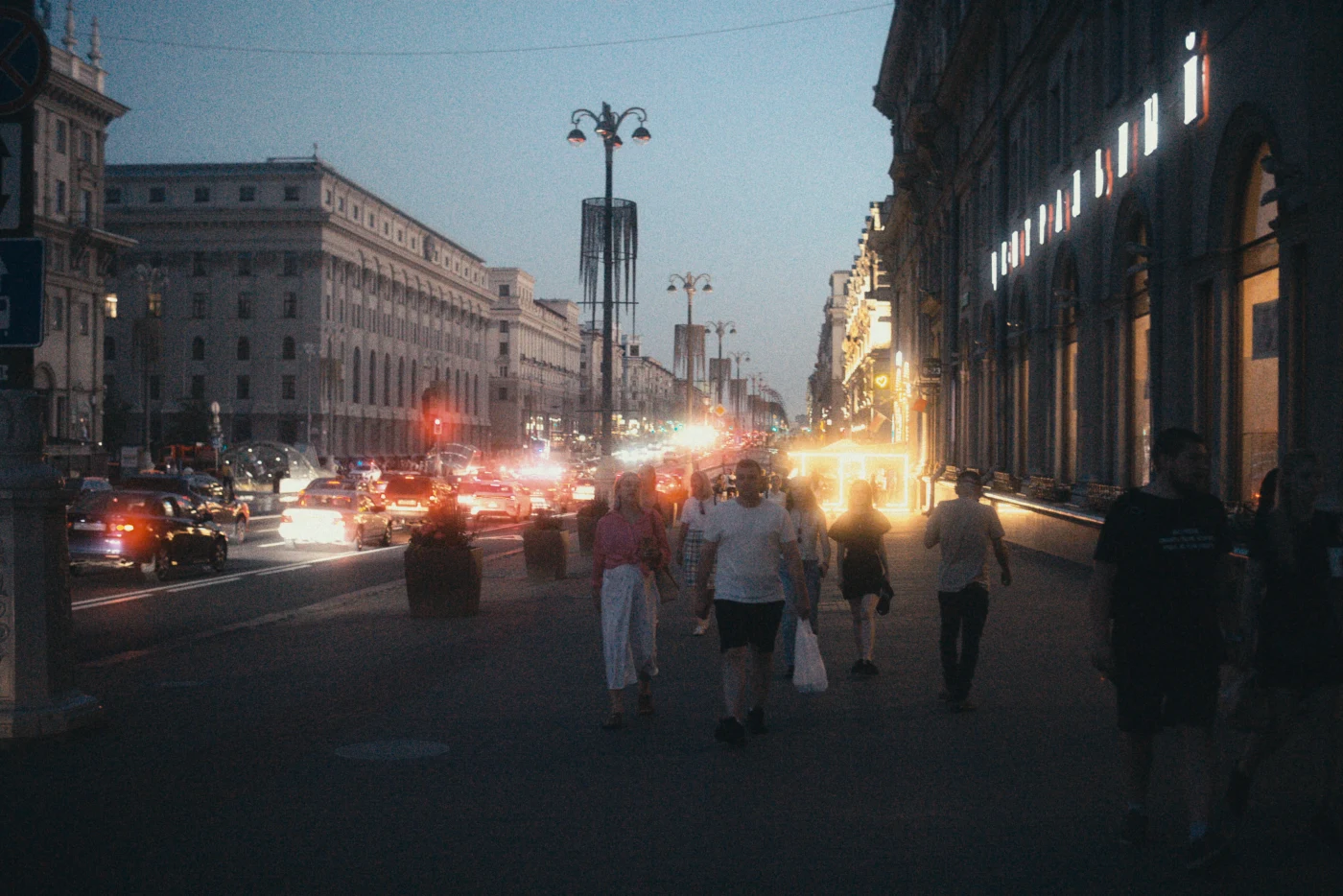
Pedestrians on a wide avenue, with buildings and city lights against the evening sky in the background.
June 2026
Minsk, Belarus
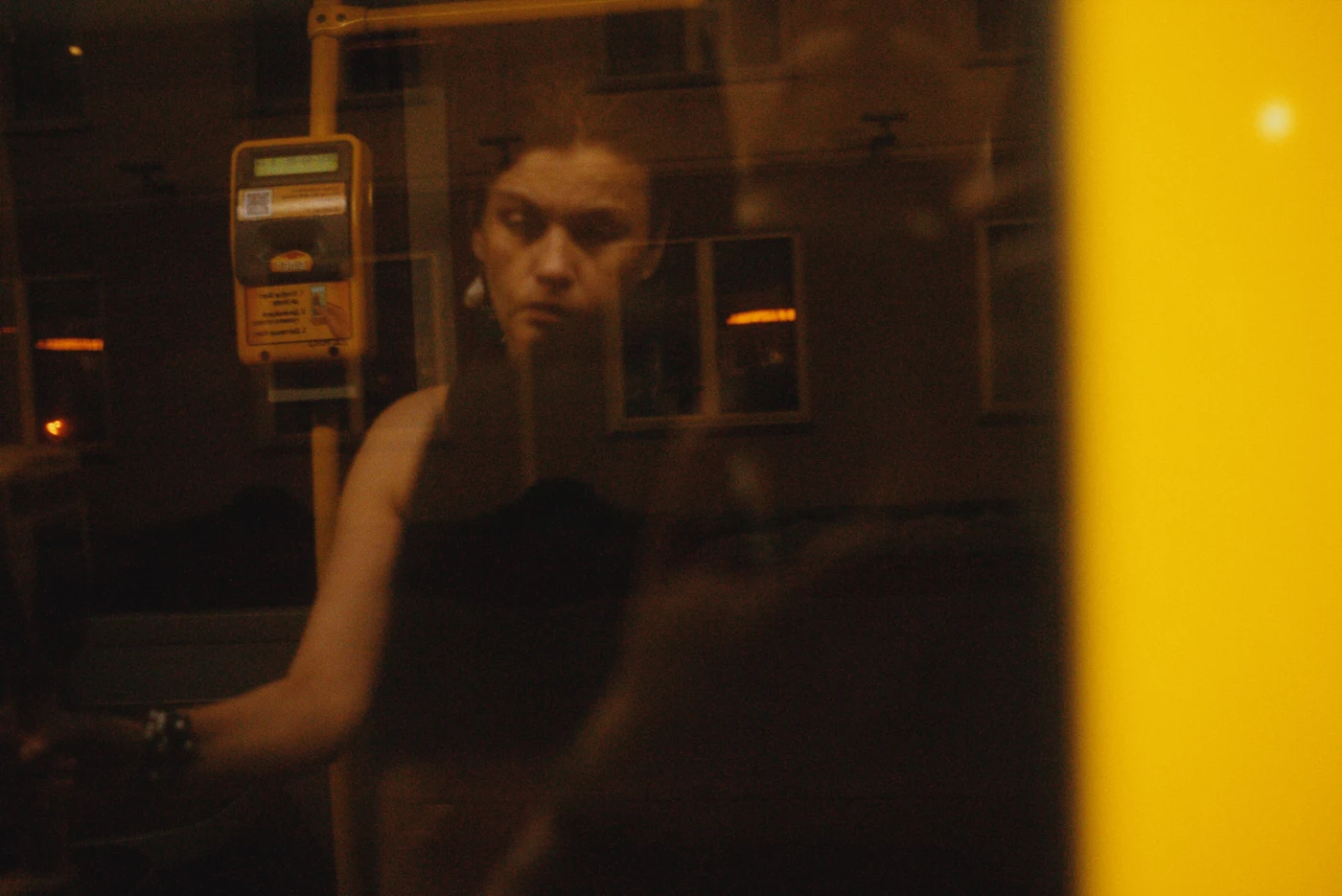
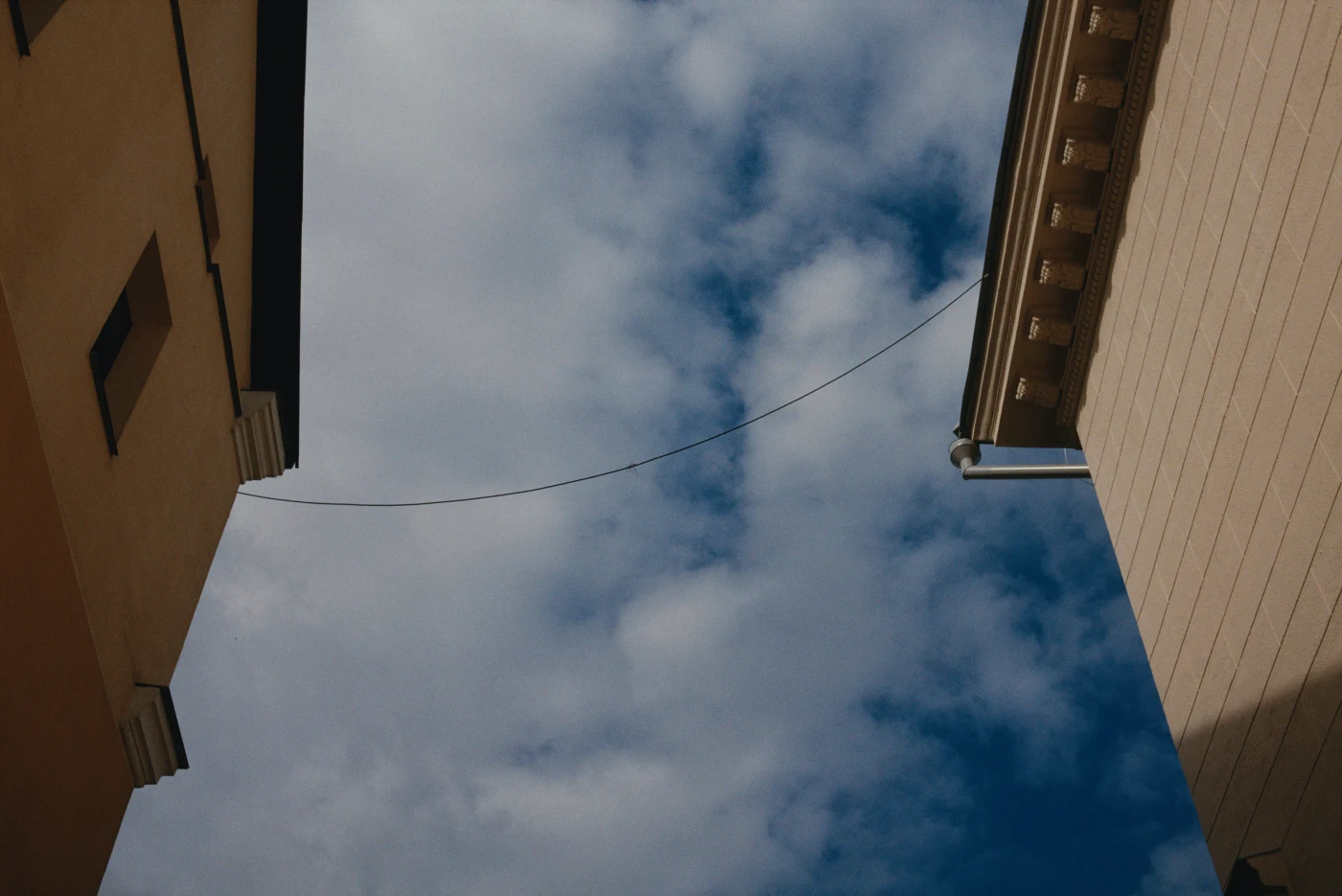
Two buildings against a blue sky with clouds.
A blurred red station wagon moves down the street, with other cars and green trees around it.
A bottle labeled “Coca-Cola” lying on the ground among grass near the sidewalk.
A bottle of “Arbishinka” syrup lying on the ground among grass.
A narrow passage between buildings with a view of a modern facade with black-and-white geometric patterns.
Sunset with clouds, light breaking through them, with cars and trees in the foreground.
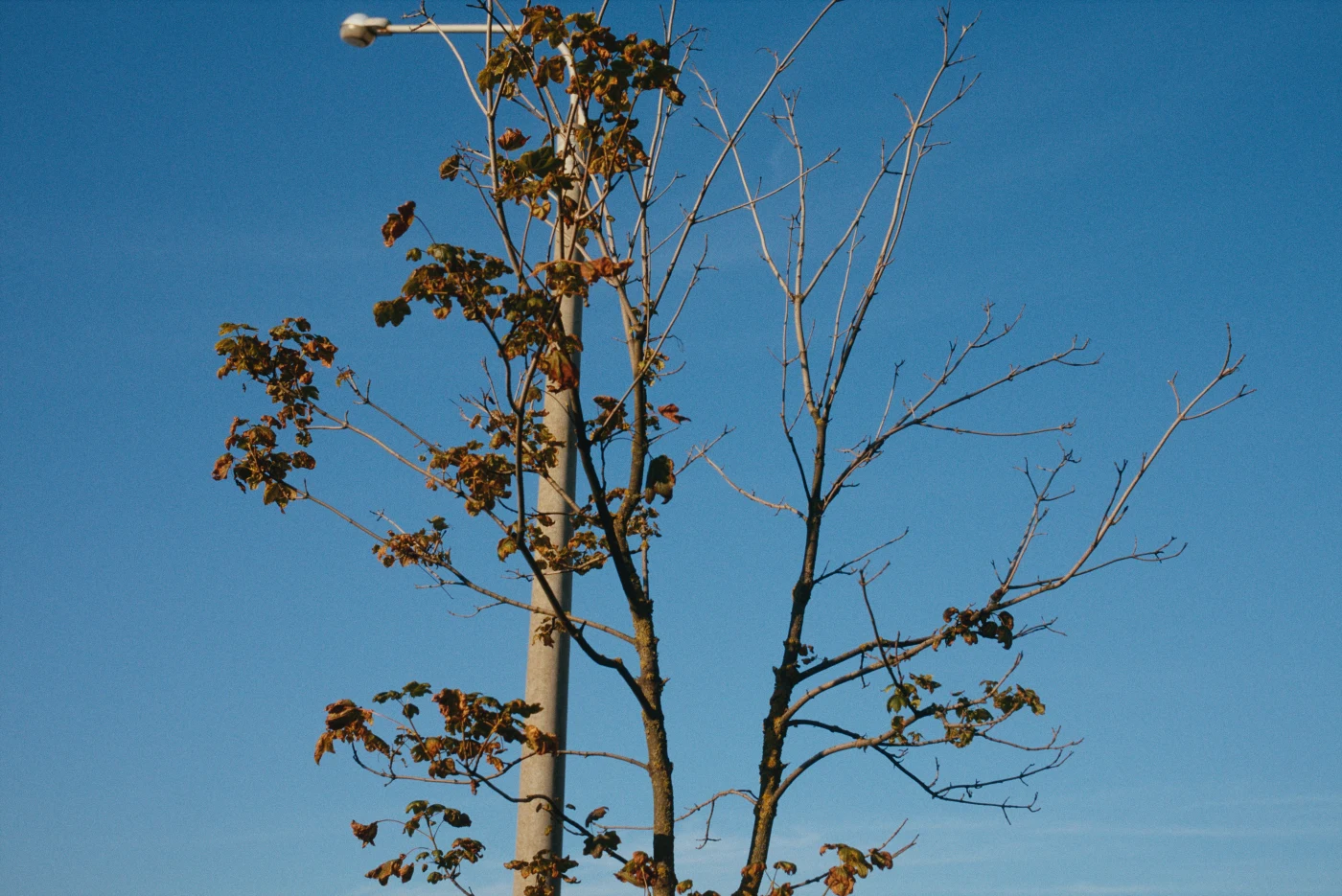
The sky with clouds and a streetlamp in the foreground.
Green shrubs against the background of an asphalt path.
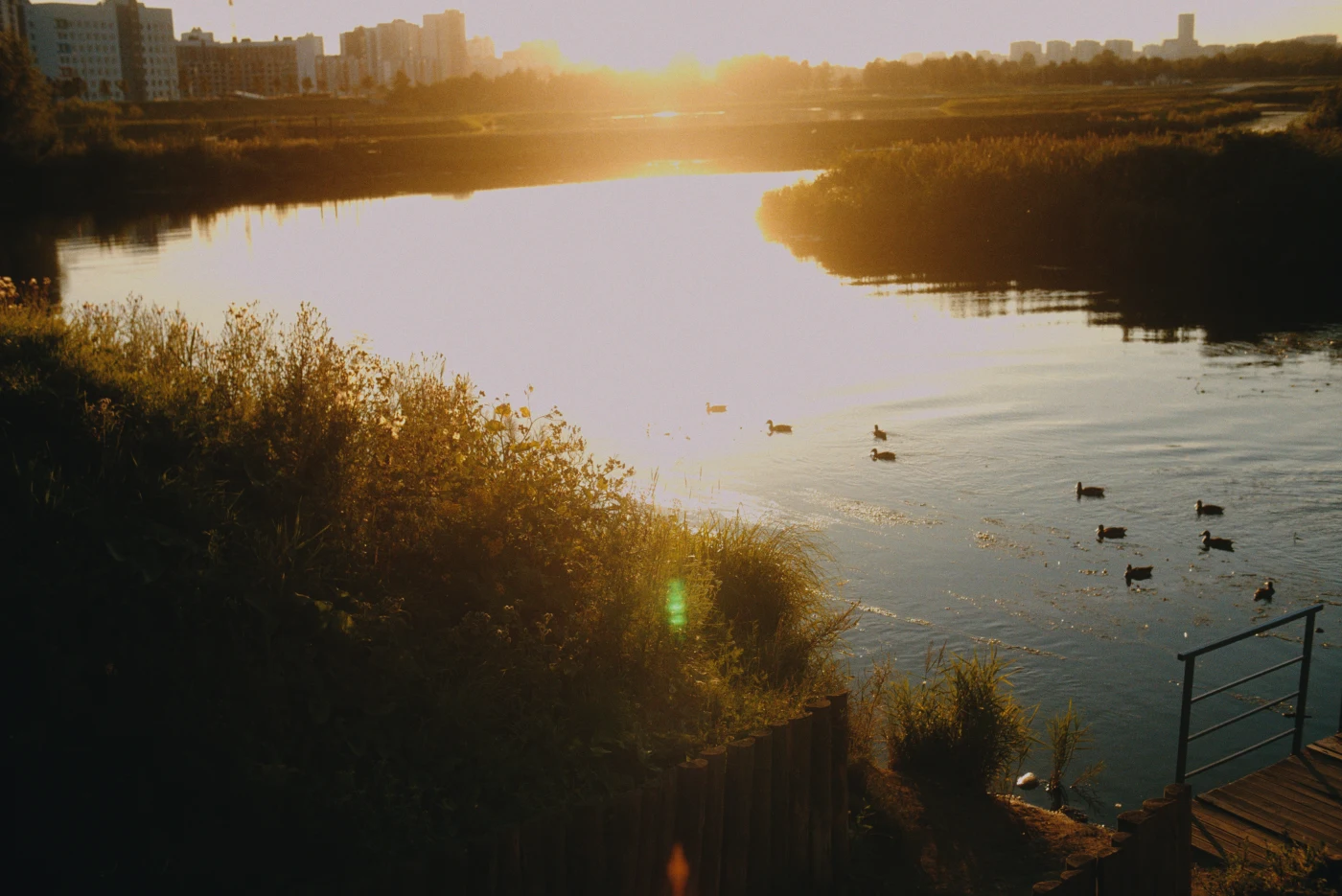
Sunset over a lake, with clouds and trees reflected in the water, creating a calm atmosphere.
May 2026
Minsk, Belarus
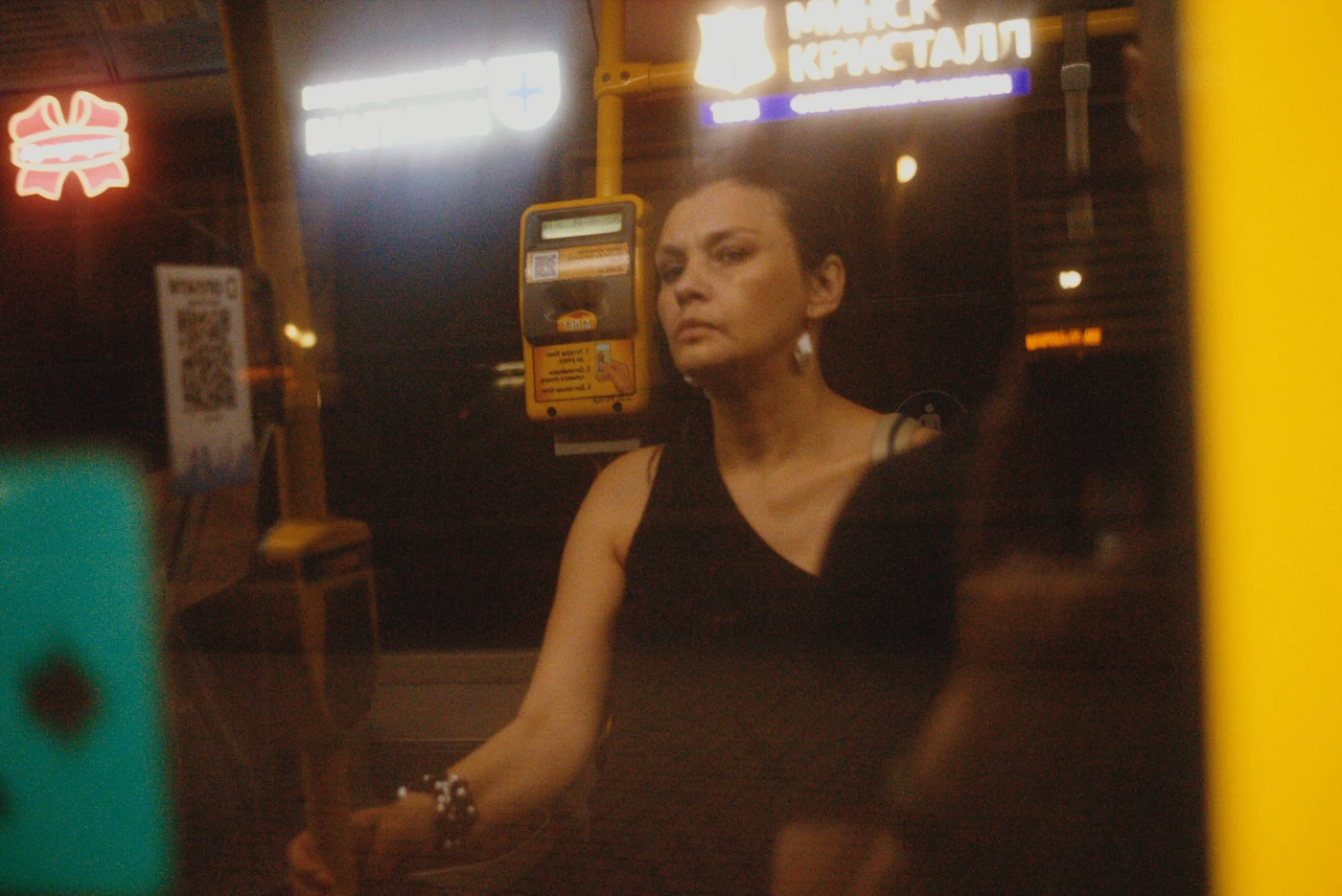
At a recent photo walk, I was mostly shooting video, but in this spot I wanted to stop time for a moment. Took a couple of shots.

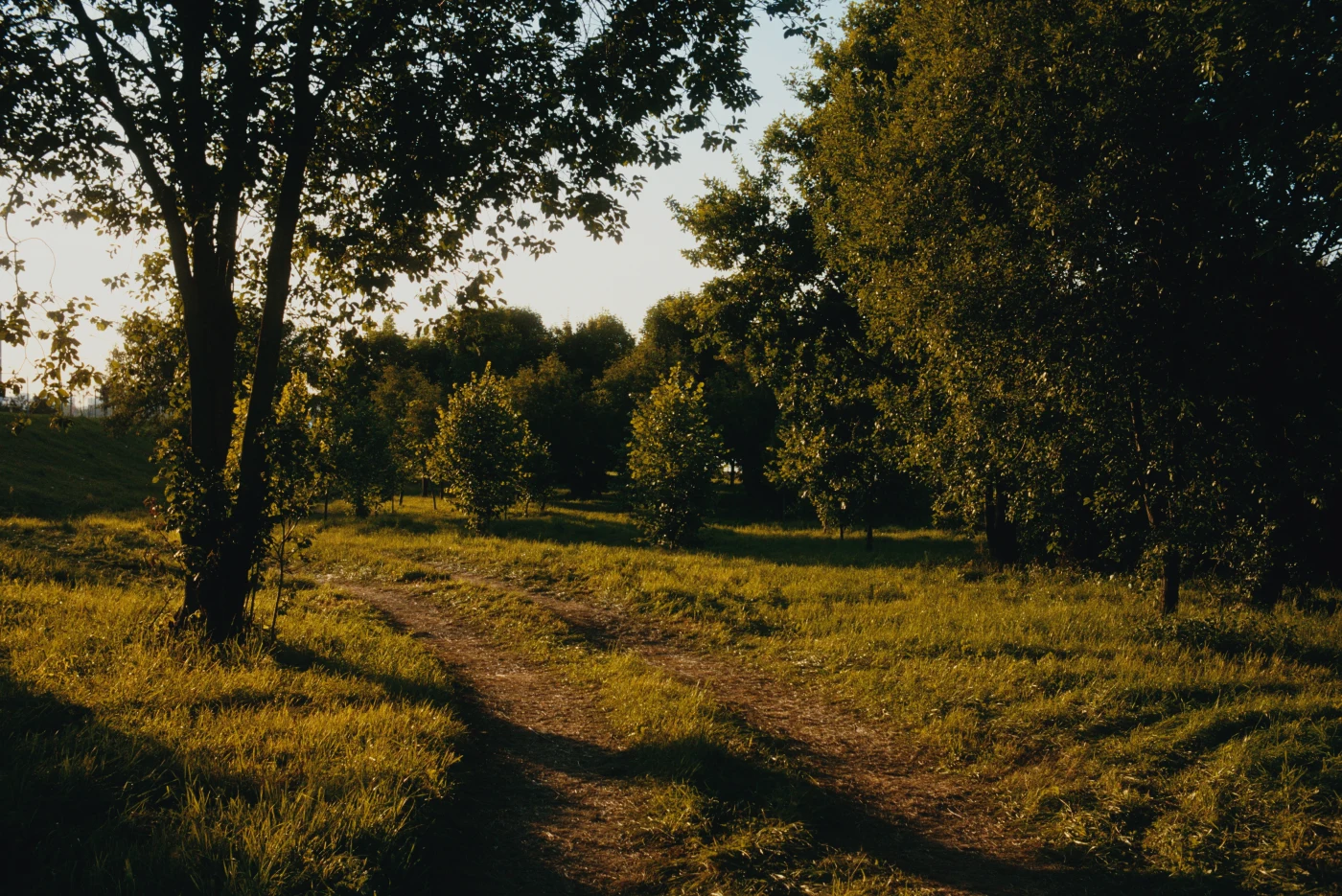
A bright woodland space with tall trees and green grass, lit by sunbeams.
Sunlight breaks through the trees, illuminating the green grass and creating a calm atmosphere in the woods.

After the photo walk, I took a stroll through the city center and made a few more shots.

A building silhouette against the evening sky, lit by streetlights and framed by overhead wires.
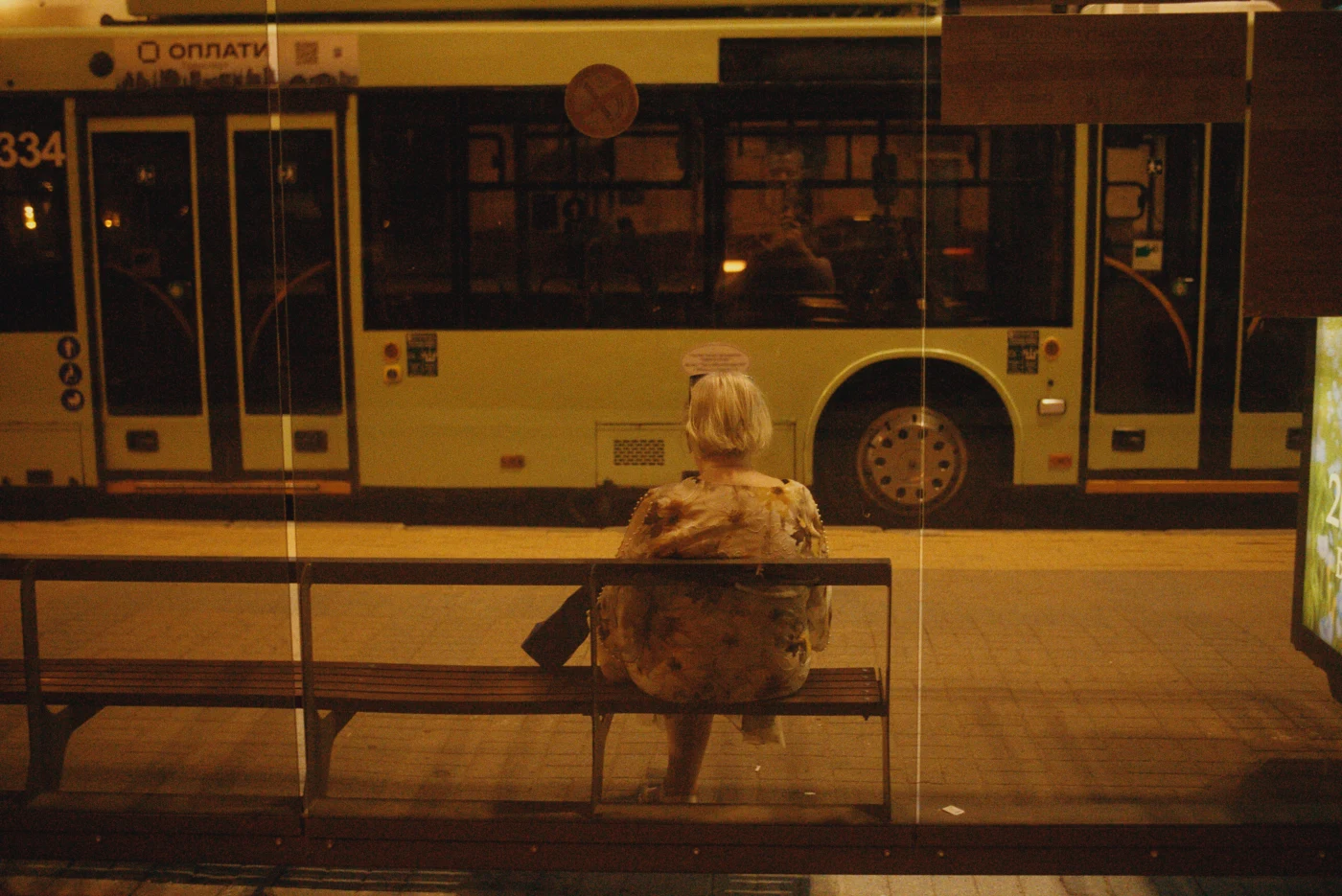
Two people sitting on a bus, one embracing the other, their heads close together.
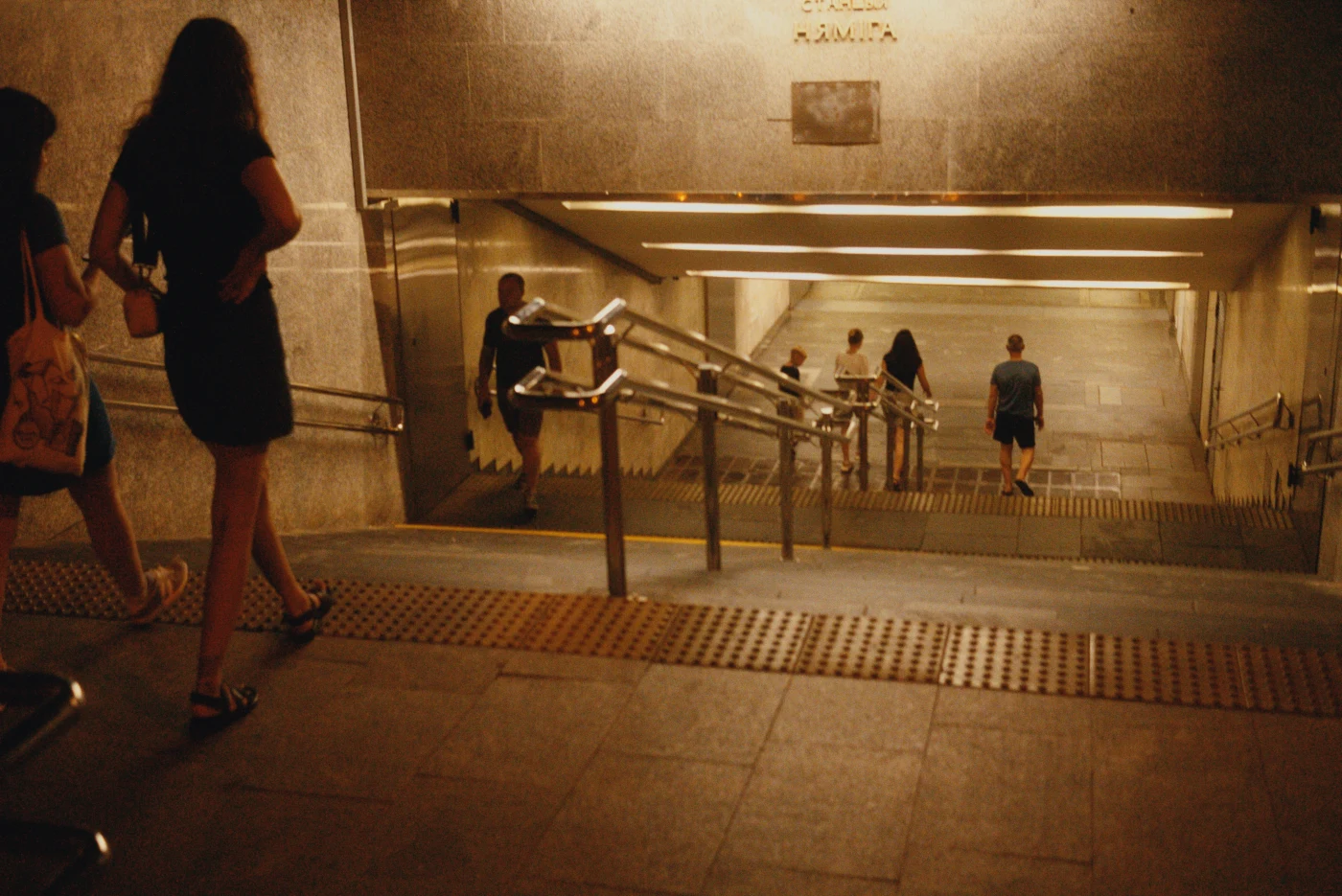
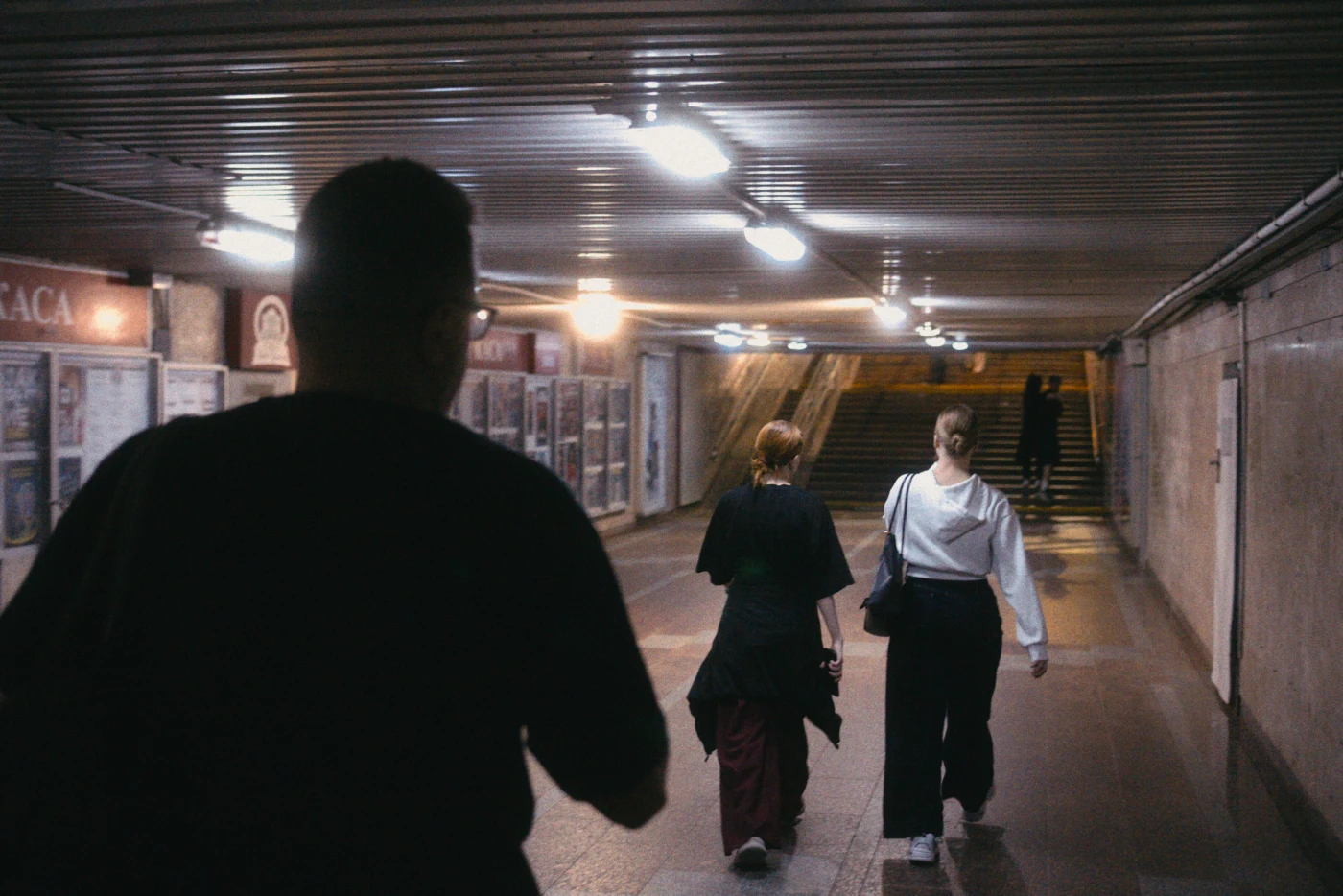
A person in dark clothing walks down a subway staircase lit by soft light.
June 1, 2026

It’s interesting how photography makes you notice things that help you look at other areas of life as well. And perhaps it’s not only photography that works this way. Any practice you truly focus on can reveal something larger. Not only inside the practice itself, but around it too.
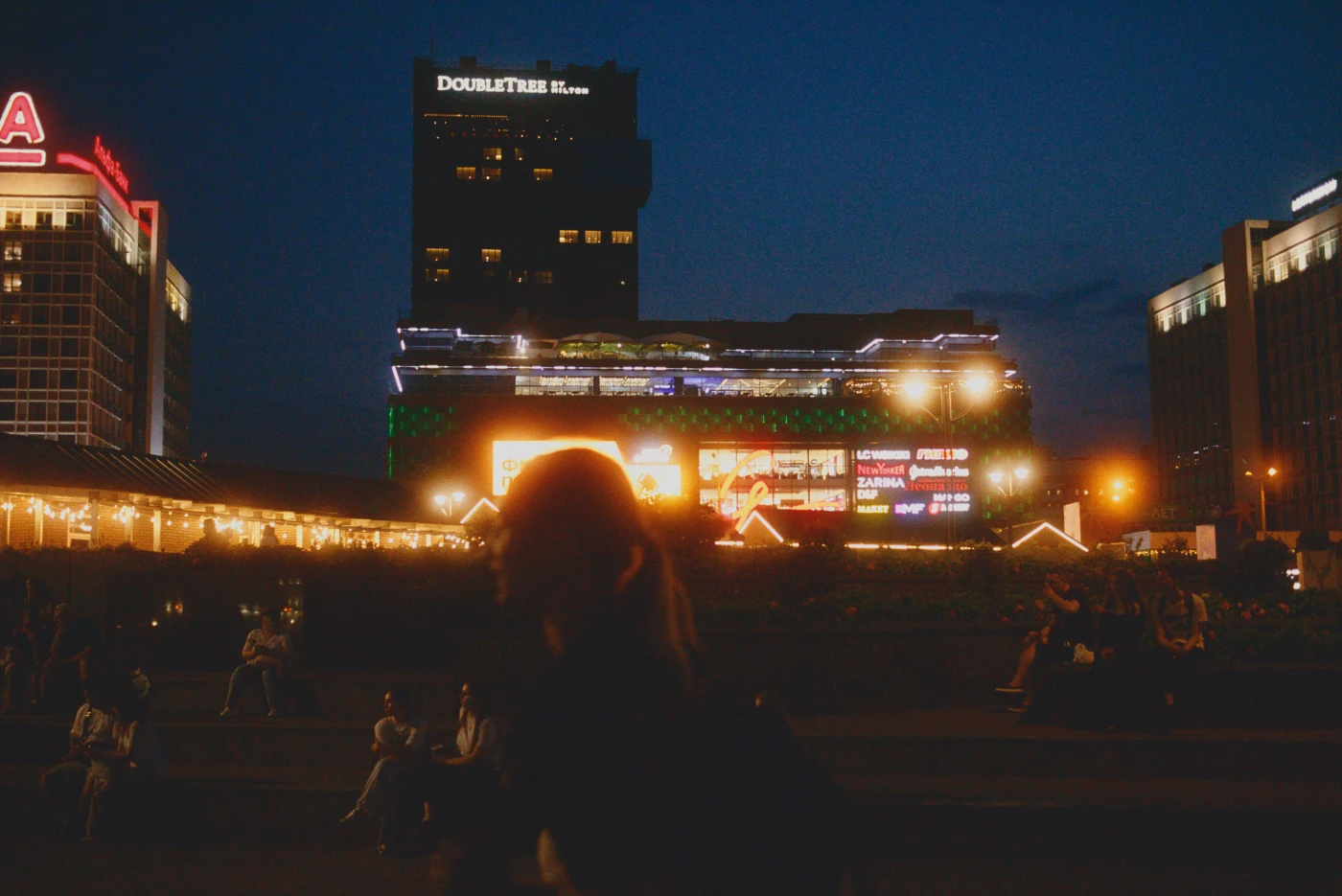
I’m thinking now about dark photography. About an image where the details are almost indistinguishable. Where the play of light and shadow is not so obvious. Where there are no strong jumps in brightness, no familiar contrast, no immediately readable picture. And this photograph is not necessarily made this way on purpose. Sometimes it is simply an image in a dark key. A photograph taken at night.
Night cityscape with high-rise buildings and an umbrella in the foreground. Dark sky, visible lights.

At night, our attention works differently. We look at light differently. We become more sensitive to faint details, to barely visible transitions, to small patches of brightness. We do not need as much light as we do during the day to make out form, shadow, presence.

But the most interesting thing does not happen when you look at such a photograph at night. The most interesting thing begins during the day. You open the image in daylight, and suddenly there is just a dark rectangle in front of you. What was full of details at night becomes empty during the day. Not because the details are not there, but because you are no longer looking from the same state.

And if we look at this more broadly, something similar happens in life. We can also fail to see certain moments because we are looking at them from the wrong state. Not in the right light. Not in the right inner time. What was once full of meaning can later seem like just a dark spot. We look and do not understand what was there. We do not make out the details. We do not feel the depth. We pass by something that was once alive.

To see such a photograph, you almost have to return to the state in which it was made. To look at it in a different light. At a different time of day. And if we are speaking about life, in a different mood, in a different silence, with a different kind of attention.

Sometimes, to see something, you do not need to add more brightness. Sometimes you simply need to enter the darkness again.

2
« Earlier Later »